
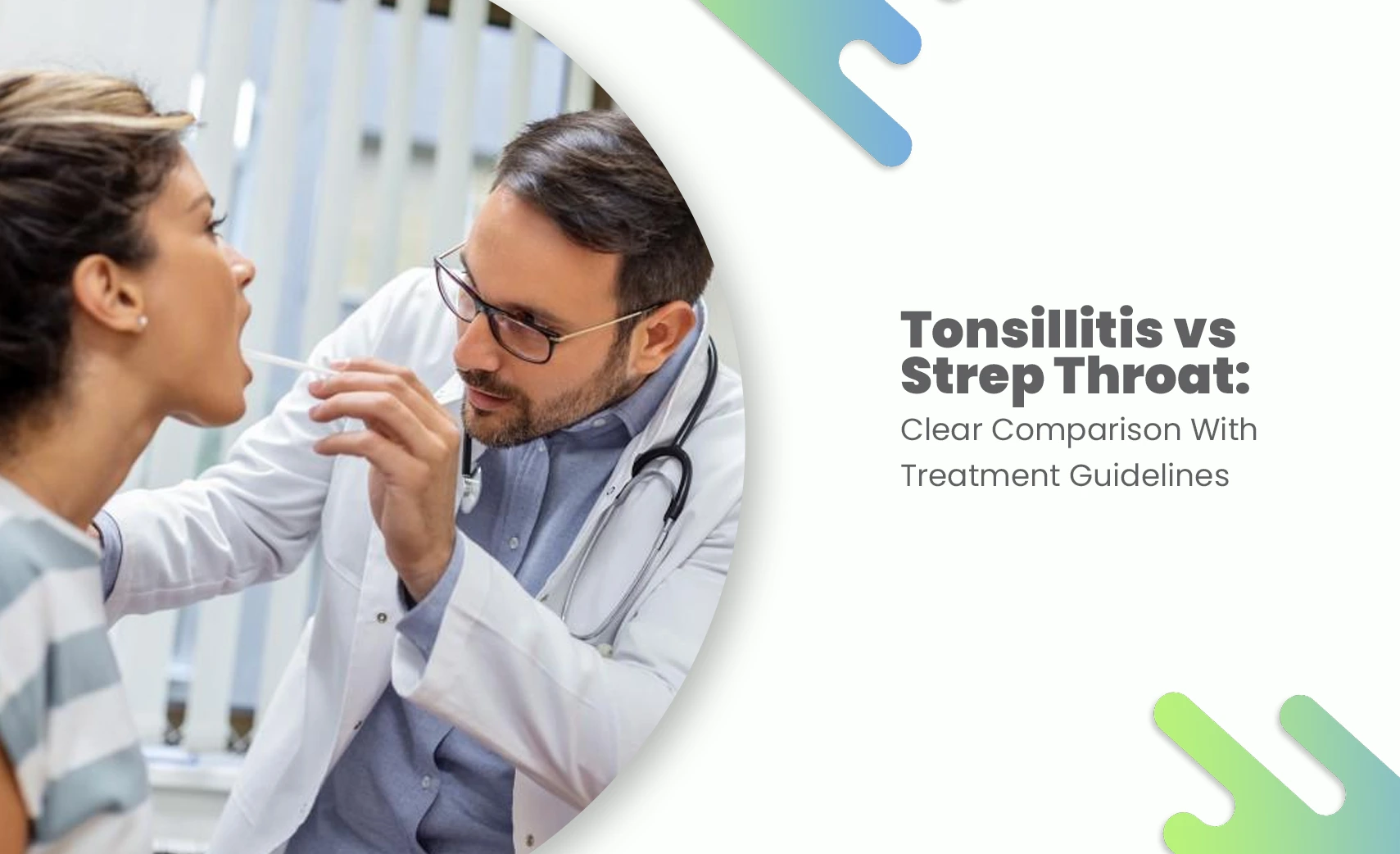
If you’ve ever woken up with that raw, burning throat, the kind that makes even swallowing your own saliva feel like an extreme sport you already know how confusing throat infections can be. And somewhere between the coughing fits, the fever blur, and the search history that suddenly looks like a medical student’s exam notes, you’ve probably wondered: Is this tonsillitis or strep throat?
Let’s be real, telling them apart isn’t as simple as people make it sound.
Both can knock you flat.
Both make talking feel like a chore.
And both arrive without warning, kind of like how seasonal skin infections seem to pop up out of nowhere every single winter.
But here’s the thing: even if they look similar, tonsillitis and strep throat follow very different rules when it comes to treatment and recovery.
Interestingly, I once mixed up the two myself and tried to “power through.” Spoiler: terrible idea. I ended up taking longer to heal, the same way many folks do when they misjudge other infections whether it’s a parasitic issue from travel (yes, that happens more than you’d think) or something as sneaky as a respiratory bug that mimics a cold.
What Tonsillitis Really Is
Tonsillitis is simply inflammation of the tonsils, those soft tissues at the back of your throat that sit quietly until they flare up like angry red balloons.
And here’s the twist:
Tonsillitis can be caused by viruses or bacteria.
Most cases, though, are viral. Think of it like how most people assume itchy skin means scabies, when in reality, tons of things from allergies to microscopic mites can cause similar symptoms. Tonsillitis works the same way: it’s broad, messy, and not always what it first appears to be.
That said, tonsillitis symptoms can vary wildly. Some people just get a mild scratchiness. Others get white patches, fever, or that sandpaper-throat sensation that turns every sip of water into an ordeal.
And What About Strep Throat?
Strep throat is more specific.
It’s caused by Group A Streptococcus, and unlike viral tonsillitis, it needs antibiotics.
You might be wondering, “How am I supposed to tell them apart at home?”
The honest answer: you usually can’t.
Strep throat doesn’t come with coughing or nasal congestion the way viral infections do. It tends to strike suddenly one minute you’re fine, the next your throat feels like it’s hosting a bonfire.
And here’s something I discovered while covering an article about infections that mimic each other (parasites do this too. Fun fact, some intestinal worms can even cause chronic stomach pain that fools people into thinking they have gastritis): strep is a master imitator.
It looks like tonsillitis, but it behaves much more aggressively.
Where Tonsillitis and Strep Diverge
To be honest, even skilled clinicians occasionally need a test to know what’s what. But patterns help.
Tonsillitis often comes with:
- Cough
- Congestion
- General throat irritation
- Symptoms similar to a cold or viral infection
Strep throat typically brings:
- High fever
- Swollen lymph nodes
- Severe, sudden throat pain
- No cough
- White streaks or red dots on the tonsils
I once interviewed an ENT specialist for a piece on bacterial vs viral infections in the respiratory tract, and she said something that stuck:
“Strep is like a sharp strike; viral tonsillitis is more of a slow burn.”
Which explains why treatments differ and why meds like amoxyclav 625 mg are used only when bacteria are confirmed.
Why Proper Diagnosis Matters (More Than You Think)
Here’s the thing: strep, if ignored, can cause complications. Serious ones. The kind you read about in medical guides on systemic infections kidney issues, rheumatic fever, even bloodstream infections in rare cases.
Tonsillitis, especially the viral kind, usually stays mild.
This is similar to how skin conditions can look identical at first glance. A scabies rash, for instance, often resembles eczema but treating both the same way leads nowhere. Misdiagnosis cascading into mistreatment is a pattern across so many illnesses, not just throat infections.
How Doctors Actually Confirm Strep
It’s not mystical; it’s just a quick rapid strep test.
- Swab the throat
- Wait a few minutes
- Get a clear answer
If the rapid test is negative but symptoms scream “bacterial,” doctors might send a throat culture for confirmation.
Once strep or bacterial tonsillitis is proven, antibiotics come into play, usually something in the amoxicillin family or broader options like amoxyclav 625 mg.
And before anyone thinks of self-medicating, this is one of those moments where doing what countless people do with antiparasitic medicines taking them “just in case” is exactly what not to do. Antibiotics aren’t harmless candies. They shape resistance patterns the same way misuse of antiparasitic drugs has led to tougher worm species worldwide.
A Real-World Example: Melissa’s Story
A friend of mine, Melissa, got what she assumed was regular tonsillitis. She had a sore throat, felt rundown, and thought a few home remedies would do the job.
But here’s where the story takes a turn similar to cases I’ve covered where people mistake parasitic infections for food poisoning or vice versa. Her rapid test came back positive for strep.
Her doctor prescribed amoxyclav 625 mg, and she felt dramatically better within 48 hours.
“I had no idea it was bacterial,” she said.
“It felt like a cold at first like one of those times you get sick after eating street food while traveling.”
That’s the weird thing about infections: sometimes the mild ones trick you; the dangerous ones hide behind familiar symptoms.
If It Is Viral Tonsillitis
Supportive care is your best friend:
- Warm teas
- Saltwater gargles
- Rest (actual rest, not scrolling on your phone)
- Fluids
- OTC pain relief
Viral tonsillitis usually clears up in 5–7 days, kind of like how minor parasitic exposures resolve on their own if the body fights them off.
And If It’s Bacterial?
Now we’re talking antibiotics.
Doctors may prescribe:
- Penicillin
- Amoxicillin
- Or broader-spectrum meds like amoxyclav 625 mg, especially when mixed bacterial growth is suspected
It works much like using targeted antiparasitics for specific worm infections precision matters. Not all drugs work for all organisms, whether it’s Streptococcus or Strongyloides.
And just like the warnings you see in medical guides about not stopping antiparasitic treatments early, ending antibiotics too soon risks relapse and bacterial resistance.
Complications to Watch Out For
Strep can lead to:
- Ear infections
- Kidney inflammation
- Rheumatic fever
- Peritonsillar abscess
This reminds me of a pattern seen in parasitic diseases too – how untreated worm infections can spread from the gut to the lungs, or how seemingly harmless itching from mites can escalate into severe skin inflammation.
Infections don’t always stay in their lane.
Can You Prevent Tonsillitis or Strep?
Mostly, yes by doing basic things we often forget:
- Handwashing
- Avoiding shared utensils
- Changing toothbrushes after recovery
- Sanitizing surfaces
- Avoiding close contact with sick people
A doctor once told me, “Toothbrushes may as well be tiny germ hotels.”
I haven’t un-heard it since.
It’s similar to hygiene rules in preventing parasite exposure, clean hands, clean surfaces, and sometimes even avoiding the wrong swimming pools.
Final Thoughts
To be honest, tonsillitis and strep throat are easy to confuse and that’s totally normal. But knowing the difference helps you treat them correctly, avoid complications, and get back to feeling human again.
If it’s viral tonsillitis? Rest, hydrate, be patient. If it’s strep? You’ll likely need antibiotics like amoxyclav 625 mg to clear it effectively.
And whatever you do, don’t fall into the temptation of self-medicating. Antibiotic misuse causes problems similar to what we now see with antiparasitic resistance worldwide.
Proper diagnosis isn’t optional, it’s your shortcut to healing.
FAQs
- How can I tell if my sore throat is strep or just tonsillitis at home?
Honestly, you can’t be fully sure without a test. Strep throat usually doesn’t come with coughing or congestion and tends to hit suddenly with intense pain and fever. Tonsillitis, especially viral types, often feels more like a regular cold. If your throat looks very red, swallowing feels impossible, and you’ve got swollen neck glands, it’s worth getting checked. A rapid strep test is the only reliable way to confirm it. - Can tonsillitis turn into strep throat if I don’t treat it?
No, they’re caused by different things. Tonsillitis can be caused by strep, but a viral infection won’t magically become bacterial. What can happen is that your symptoms worsen or you develop complications if you ignore a bacterial infection thinking it’s viral. That’s why getting the right diagnosis just like with any infection from scabies to parasitic worms is so important. - How quickly do throat infections improve once antibiotics are started?
If it’s truly strep throat or bacterial tonsillitis, many people start feeling noticeably better within 24–48 hours of taking prescribed antibiotics. Pain reduces, fever settles, and swallowing gets easier. But even if you feel fine halfway through the course, it’s crucial to finish it to avoid relapse or resistance, kind of like how stopping antiparasitic medications early can let parasites come back stronger. - What if my sore throat keeps coming back every few weeks?
Recurring throat infections are more common than you’d think. Sometimes it’s chronic tonsillitis. Sometimes it’s allergies, acid reflux, or even repeated exposure to sick kids or coworkers. And occasionally, persistent infections mimic completely unrelated health issues similar to how parasitic illnesses can imitate digestive or respiratory conditions. If your sore throat is a regular visitor, an ENT evaluation is worth it. - Is it safe to treat my symptoms at home before seeing a doctor?
For mild, cold-like tonsillitis absolutely. Warm saltwater gargles, hydration, rest, and over-the-counter pain relievers can help a lot. But if you have a high fever, severe pain, difficulty swallowing, or your symptoms worsen quickly, you shouldn’t delay medical care. Home remedies have limits, just like with head lice, scabies, or intestinal worms, supportive care helps, but proper diagnosis is what truly solves the problem.
References
- https://www.cdc.gov/group-a-strep/hcp/clinical-guidance/strep-throat.html
- https://www.nhs.uk/conditions/tonsillitis/
- https://www.aafp.org/pubs/afp/issues/2004/0315/p1465.html