
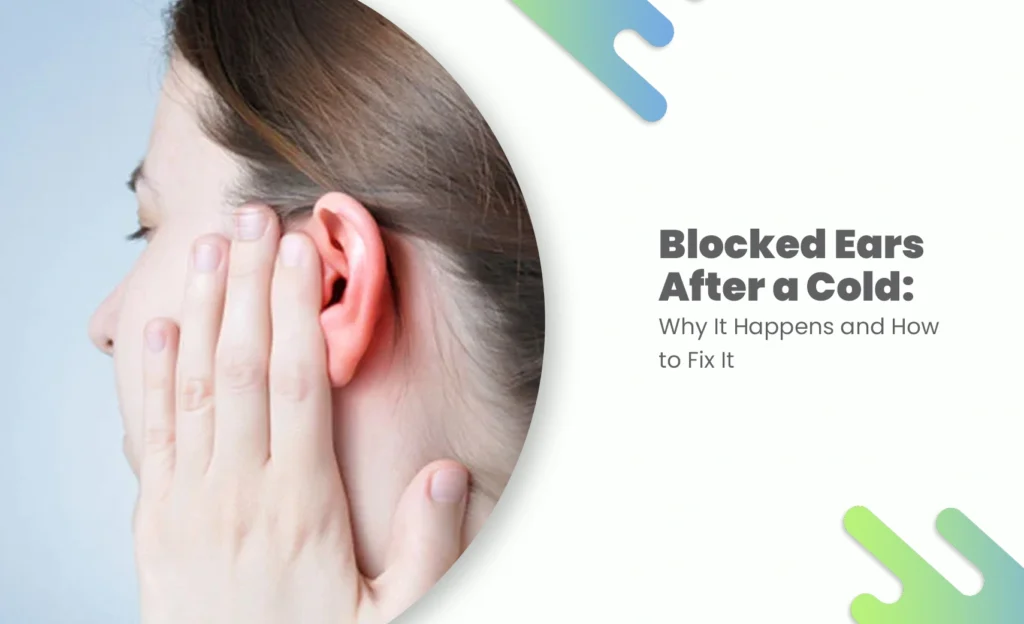
There’s nothing quite as annoying as recovering from a cold only to realize… your ears didn’t get the memo. You’re breathing better, your throat isn’t scratchy anymore, but suddenly every sound around you feels muffled like you’re underwater or walking around with invisible earplugs jammed inside your skull.
Let’s be real, blocked ears after a cold are one of those strangely frustrating experiences that nobody warns you about. You expect coughing, sneezing, maybe fatigue. But this half-hearing, half-echoing sensation? It always catches people off guard.
You might be wondering, why does this even happen?
It’s just a cold, not a plane landing or a deep-sea dive.
But here’s the thing: the body doesn’t follow simple logic. Especially not the delicate system inside your ears. And interestingly, ear congestion after a viral infection is way more common than people think I’ve heard friends describe it as “living in a bubble,” “feeling like my head is stuffed with cotton,” or my personal favorite, “like my ears are buffering.”
To be honest, the science behind it is fascinating in a weird, slightly gross way.
What’s Actually Going On Inside Your Ears?
So, when you catch a cold whether mild or full-blown you’re dealing with inflammation everywhere: nose, throat, sinuses, the whole upper respiratory neighborhood. And your ears are very much part of that neighborhood.
Inside the ear, there’s a small canal called the Eustachian tube. Its job is simple: equalize pressure and drain fluid. That’s it. But when a cold hits, this tube can get inflamed or blocked by mucus. Suddenly, it stops doing its job. Pressure builds up. The sound gets distorted. You feel “clogged.”
Think of it like a water pipe partially blocked with gunk.
Not dangerous… just irritating.
Sounds weird, right? But that thin little tube determines whether you hear normally or feel like you’re stuck in a tunnel.
This same concept appears in other infections too, like when sinus pressure causes tooth pain, or when bacterial throat infections radiate discomfort to the ears. I once wrote about how even minor respiratory bugs can mimic more serious issues, and it always comes back to one theme: everything in the head is connected.

Why the Blocked Feeling Lingers Even After You’re “Better”
You can be symptom-free, no cough, no sneezing and still deal with plugged ears for days or even weeks.
It’s not as simple as you think.
Inflammation takes time to settle, and fluid in the middle ear drains at its own pace. Slow, stubborn, infuriating.
I remember interviewing an ENT specialist for a piece comparing upper and lower respiratory infections, and he said something that stuck with me:
“The ear is often the last part of the upper airway to recover after a cold.”
And he’s right. That lingering fullness isn’t a new infection. It’s just the aftermath.
This delayed recovery is similar to what happens after certain parasitic infection symptoms resolve, but the body takes longer to feel “normal,” which is something I’ve seen when covering topics like intestinal worm-induced stomach discomfort or travel-related gut issues. The infection goes, but the effects linger.

When Blocked Ears Turn Into Something More Serious
Most of the time, ear congestion fades on its own. But sometimes, fluid gets trapped long enough to cause bacterial growth.
That’s when people begin experiencing:
- Ear pain
- Fever
- Hearing loss
- Drainage
- Persistent pressure
And suddenly, you’re no longer dealing with a harmless leftover from a cold you’re now in ear infection territory. Middle ear infections can get surprisingly painful. I’ve written about similar issues in pieces on recurring winter infections and even in comparisons between ear problems and conditions like scabies or eczema how sometimes multiple illnesses can start with the same vague symptoms.
When a bacterial infection is suspected, doctors may prescribe antibiotics, and that’s where medications like Cephadex 250 Mg occasionally come into play. But I want to emphasize that antibiotics aren’t a quick fix for normal post-cold ear clogging. Cephadex 250 Mg is only useful when bacteria are actually involved.
That said, too many people self-medicate without real diagnosis, which reminds me of the dangerous self-treatment patterns in parasitic infections, people taking antiparasitic tablets “just in case,” not realizing they can do more harm than good. Whether it’s an ear infection or worms, treating the wrong thing solves nothing.
Natural Pressure Problems: The “Pop” That Won’t Come
Everyone knows the trick: swallow, yawn, chew gum, try to “pop” your ears.
Sometimes it works. Sometimes it doesn’t.
And when it doesn’t, people start to panic. I’ve been there sitting on a couch, swallowing aggressively like a pelican trying to unstick a fish bone, hoping for just one satisfying pop.
Interestingly, the same biological mechanics that fail when you’re congested are the ones that misbehave when you’re on an airplane or diving underwater. In fact, ENT doctors often compare post-cold ear blockage to mild barotrauma.
It’s annoying, not dangerous.
So… How Do You Fix It? (Without Making It Worse)
Here’s the thing: you cannot force your Eustachian tubes open.
And poking around with Q-tips? Please don’t. Most ear issues I’ve covered stem from over-cleaning rather than under-cleaning.
What you can do is encourage drainage and reduce inflammation naturally:
Warm compresses.
Steam inhalation.
Hydration.
Gentle swallowing + yawning.
Nasal saline rinses.
Humidifiers.
It’s the same concept I’ve seen in respiratory infection care and even in managing minor skin infections supporting the body while it does the heavy lifting.
But when pain kicks in or symptoms become severe, that’s when medical treatment matters. And yes, in certain bacterial infections, something like Cephadex 250 Mg may be prescribed. It doesn’t magically unblock ears, but it does treat the underlying infection causing the blockage.
Again: Cephadex 250 Mg has a purpose, and it’s not casual congestion relief. It’s targeted therapy.
A Story From My Notes: When a Cold Isn’t Just a Cold
A few years ago, I interviewed a 28-year-old traveler who came back from a beach trip with what she thought was just a mild cold. The cold passed, but her ears stayed clogged for almost two weeks. She was convinced it was leftover seawater or maybe earwax.
Turns out, she had lingering inflammation that trapped fluid behind the eardrum. Not an infection, just stubborn congestion. Her ENT told her it was similar to how some people get persistent sinus pressure after winter infections or how stomach issues linger long after parasitic exposure during travel.
She didn’t need antibiotics.
She needed time.
Interestingly, this is a common pattern across different infections. Whether it’s respiratory, ear-related, or parasitic, symptoms often outstay the cause.
Where Medicines Like Cephadex 250 Mg Fit In
Let me be clear: most blocked ears after a cold do not need antibiotics. They resolve on their own.
But if a bacterial infection develops and only if medications such as Cephadex 250 Mg may be used. ENT specialists often choose antibiotics when there’s:
- Severe ear pain
- High fever
- Pus or fluid drainage
- Significant hearing loss
- Symptoms lasting beyond 7–10 days
- Swelling behind the ear
It’s the same careful, diagnosis-first approach doctors use when treating things like skin infections, sinus inflammation, or bacterial throat issues.
That said, Cephadex 250 Mg shouldn’t be taken casually. Antibiotic overuse leads to resistance, a topic I’ve covered in pieces about why infections stop responding to treatment and how stopping antibiotics midway can create long-term problems.
If you ever feel tempted to self-prescribe Cephadex 250 Mg, remind yourself how dangerous self-treatment becomes with parasitic infections. People often confuse symptoms, misdiagnose themselves, and worsen the condition. Ears deserve the same caution.
How Long Until the Blocked Feeling Goes Away?
Most cases improve within:
- A few days
- A week
- Sometimes two
Rarely longer, unless there’s allergy involvement, chronic sinus issues, or structural problems.
If it lasts more than a month, that’s when ENT doctors consider other possibilities like fluid build-up, nasal polyps, or chronic Eustachian tube dysfunction. It’s similar to how chronic infections skin, respiratory, even parasitic need deeper evaluation rather than quick fixes.
When Blocked Ears Point to Something Bigger
While uncommon, persistent blockage can signal:
- Middle ear infection
- Severe sinus infection
- Eardrum damage
- Allergic inflammation
- Structural issues
And in extremely rare cases, unusual infections or immune reactions. I once covered an article on how parasites can even affect hearing when they migrate through the bloodstream, something that still blows my mind years later.
But don’t panic. Most cases are harmless and temporary.
Final Thoughts
Blocked ears after a cold are one of those odd, lingering annoyances that make you feel disconnected from the world literally. But in most cases, it’s temporary, harmless, and part of the healing process.
Support your body. Don’t rush antibiotics. And reserve medications like Cephadex 250 Mg for when they’re actually needed.
To be honest, the body really does know what it’s doing. Sometimes it just takes the scenic route to get there.
FAQs
- Should I take antibiotics for blocked ears after a cold?
Usually, no. Antibiotics like Cephadex 250 Mg won’t help unless a bacterial infection is confirmed. Most ear congestion is inflammatory and needs time not medication. - Can blocked ears last even after all my cold symptoms are gone?
Absolutely. Lingering inflammation can keep the Eustachian tubes clogged for days or weeks. Annoying but normal. - Why do my ears feel worse at night?
Gravity helps drainage during the day. At night, congestion builds. Happens with sinus pressure too. - Is earwax causing the blockage?
Not usually. Post-cold blockage is internal, behind the eardrum. Wax affects the outer ear only. - When should I see a doctor?
If the blocked feeling lasts 2+ weeks, you develop pain, fever, or significant hearing loss, or you suspect an infection.
References
- https://www.nhs.uk/conditions/ear-infections/#:~:text=How%20an%20ear%20infection%20is,a%20sign%20of%20an%20infection.
- https://www.enthealth.org/conditions/ears-and-altitude-barotrauma/
- https://www.cdc.gov/antimicrobial-resistance/about/index.html#:~:text=Resistance%20to%20even%20one%20antibiotic,and%20recovery%2C%20sometimes%20for%20months.