
Every December, something predictable yet oddly under-discussed happens inside dermatology clinics across the US and UK.
It’s not just winter eczema. It’s not always “dry skin.” And it’s definitely not just stress – though that doesn’t help. Instead, doctors start seeing a familiar pattern: facial redness that won’t settle, itching that shows up at night, eyelids acting gritty, lashes flaking for no obvious reason.
Demodex mites.
I know. Even the name sounds uncomfortable. The first time I heard it, years ago while reporting on winter skin infections, I remember pausing mid-interview thinking, Why does nobody warn us about this earlier?
The thing is, Demodex mites aren’t rare, exotic, or even new. They’ve always been here. What is new – or at least seasonal – is how winter quietly gives them the upper hand.
The mites that never left (and usually behave)
Demodex mites live in human hair follicles and oil glands. Most adults have them. That’s not an opinion – it’s been documented repeatedly in dermatology literature.
Under normal conditions, they coexist peacefully. Your skin barrier stays intact. Oil production remains balanced. Your immune system keeps a watchful but calm eye on things.
December disrupts that balance.
Cold air outside strips moisture. Heated indoor air dries skin further. Long hot showers weaken the barrier even more. Add seasonal stress, poor sleep, sugar-heavy diets, and suddenly the environment shifts.
Interestingly, this mirrors what dermatologists often explain when discussing Causes of itchy skin without rash – the skin can signal trouble long before visible signs appear.
Demodex doesn’t invade. It waits.

Why cold and dryness matter more than people think
You might be wondering why winter, specifically, makes such a difference.
It comes down to the skin barrier. When humidity drops, your outermost layer loses water faster than it can replace it. Micro-cracks form. Inflammation increases. Sebum production becomes unpredictable.
Some people produce too little oil. Others overproduce as compensation. Either way, Demodex mites benefit.
To be honest, we still underestimate how much barrier damage influences skin conditions. This same mechanism shows up in seasonal flares discussed in Why Some People Get Recurrent Skin Infections Every Winter – the trigger isn’t new exposure, it’s weakened defense.
Once the barrier falters, mites multiply quietly. Symptoms come later.
Indoor heating: the underestimated accomplice
Cold weather gets blamed. Indoor heat often escapes criticism.
Central heating, radiators, space heaters – they all reduce indoor humidity. Skin dries out faster indoors than outside on many winter days. Hot showers feel comforting but strip natural oils further.
That said, heat also dilates surface blood vessels. For people prone to redness, flushing, or rosacea, this creates fertile ground for Demodex-related inflammation.
Dermatologists often point patients toward reading on How Rosacea Affects the Skin and How to Manage It because the overlap is real. Higher Demodex density has been repeatedly documented in inflammatory rosacea cases.
It’s not a coincidence. It’s the environment.
Night-time itching isn’t random
One detail clinicians pay close attention to is timing.
Demodex mites are nocturnal. If itching, crawling sensations, or burning worsen at night, it’s a diagnostic clue. This pattern is often mentioned alongside conditions like Pinworm Itching at Night: Causes, Relief, and Prevention, though the organisms differ, the timing logic doesn’t.
Patients often tell me, “It’s fine all day. Then bedtime hits.”
That detail matters.
The December stress factor nobody likes to admit
December isn’t just cold. It’s emotionally loud.
Travel disruptions. Deadlines. Family obligations. Less sleep. More alcohol. More sugar. More screens. Less sunlight.
All of this affects immune regulation.
Demodex thrives when inflammation rises and immune responses become inconsistent. The body doesn’t notice the overgrowth until irritation crosses a threshold.
This immune distraction is also discussed broadly in Why Some People Get Sick More Often, and skin is no exception.
The flare feels sudden. The buildup wasn’t.
When treatment enters the conversation
Once Demodex overgrowth is suspected – or confirmed through clinical signs – treatment focuses on two things: reducing mite density and calming inflammation.
This is where ivermectin-based topical therapies often come into discussion. In dermatology settings, one option doctors may prescribe is IVREA 1 Cream.
It’s chosen not because it’s aggressive, but because it’s targeted. It addresses mites while also easing inflammatory responses that keep symptoms looping.
Patients sometimes expect immediate results. That expectation usually needs resetting.
Dermatologists often frame IVREA 1 Cream as a slow recalibration rather than a quick fix. Skin needs time. Mite populations decline gradually. Redness fades in stages.
The mistakes that quietly undo progress
Here’s the part nobody enjoys hearing.
When symptoms appear, people panic. They scrub harder. Add exfoliants. Switch products weekly. Stack activities. Chase dryness with heavy occlusives that trap heat.
This often worsens the barrier damage that allowed Demodex to overgrow in the first place.
Many clinicians point patients toward simpler routines during flare management, similar to advice given in Remedies for seasonal skin infection – gentle cleansing, minimal actives, and consistency.
Used properly, IVREA 1 Cream fits into that philosophy rather than escalating irritation.
Eyelids, lashes, and the overlooked signs
Facial skin isn’t the only area affected.
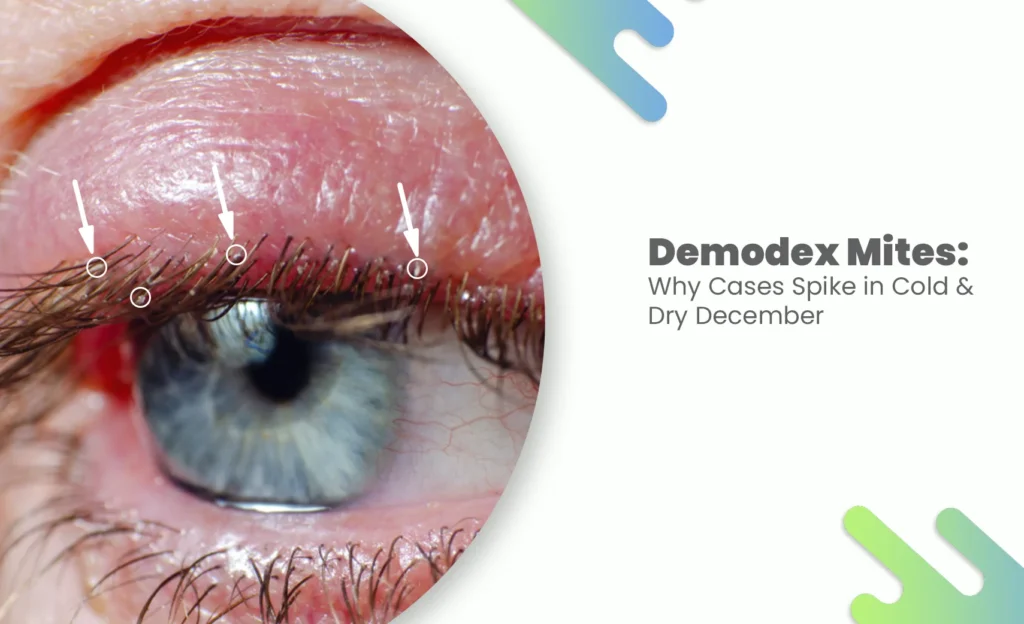
December also brings an uptick in eyelid irritation – burning, crusting, lash debris. This is often linked to Demodex blepharitis, which becomes more noticeable when tear film stability drops in dry indoor air.
This overlap is discussed in clinical guides like How to Treat Demodex Blepharitis Fast, though many people don’t connect eye symptoms with skin changes at first.
They’re connected.
Why progress feels uneven (and why that’s normal)
One of the most frustrating aspects of treatment is inconsistency.
A few good days. Then a setback. Then improvement again.
That’s normal.
Skin cycles take weeks. Immune recalibration isn’t linear. Winter conditions persist even as treatment starts working.
Dermatologists usually caution against judging outcomes too early when using therapies like IVREA 1 Cream. Most improvements appear gradually over several weeks, not overnight.
Patience isn’t passive here. It’s part of the treatment.
Prevention is quieter than treatment – but more powerful
Once symptoms calm, prevention becomes the real strategy.
Humidifiers. Lukewarm showers. Gentle cleansers. Reduced alcohol during flare-prone months. Fewer product changes. Earlier barrier repair before winter fully sets in.
These measures mirror advice seen in How to Clean Your Makeup Tools to Avoid Skin Mites and How Long Can Parasites Survive on Makeup, Beauty Blenders, and Mascara Wands? – environmental control matters more than people realize.
Some clinicians recommend proactive winter routines for patients who previously needed IVREA 1 Cream, rather than waiting for symptoms to return.
Balance beats eradication.
When to stop guessing and see a dermatologist
Not every red face is Demodex. Not every itch means mites.
If redness persists, symptoms worsen at night, eyelids become involved, or over-the-counter changes fail, professional evaluation matters.
Dermatologists rule out eczema, contact dermatitis, fungal infections, rosacea variants, and more – conditions often compared in reads like Scabies vs. Eczema: Spotting the Difference or 10 reasons why your face is red.
In clinical care, IVREA 1 Cream is typically used with guidance, not guesswork.
The bigger truth about December skin
Demodex mites aren’t villains. They’re opportunists.
Winter gives them permission by weakening the skin barrier, altering immunity, and changing daily habits. Understanding that reframes the experience – from fear to management.
I’ve spoken with patients who felt embarrassed or alarmed when mites were mentioned. But dermatologists see this pattern every winter. It’s common. It’s manageable.
With informed care, patience, and treatments such as IVREA 1 Cream when appropriate, most people regain comfort and control.
December doesn’t have to win.
Skin remembers balance. It just needs time – and the right conditions – to return there, sometimes with the help of IVREA 1 Cream.
FAQs
- Why do Demodex mite problems get worse in December?
Cold outdoor air and dry indoor heating weaken the skin barrier in winter. When the barrier is compromised, Demodex mites – already present on most adults – can multiply more easily, leading to itching, redness, and irritation. December just creates the perfect conditions for them to act up. - How do I know if my symptoms are from Demodex mites or just dry skin?
Dry skin usually improves with moisturizers and gentle care. Demodex-related issues often come with persistent redness, itching that worsens at night, flaking around the nose or eyebrows, or eyelid irritation. If symptoms don’t settle with basic winter skincare, it’s worth getting checked. - Are Demodex mites contagious from person to person?
Not in the way people usually fear. Demodex mites are a normal part of human skin and aren’t considered highly contagious. Problems arise from overgrowth, not from “catching” them from someone else. - How long does it take to see improvement once treatment starts?
Improvement is usually gradual. Redness and irritation may take a few weeks to calm down as the skin barrier heals and mite activity decreases. Flare-ups can look uneven at first, which is normal during winter. - Can I prevent Demodex flare-ups next winter?
You can reduce the risk by protecting your skin barrier early – using a humidifier, avoiding very hot showers, keeping skincare simple, and managing known triggers like stress and alcohol. Prevention is often easier than treating a full flare once winter is in full swing.