
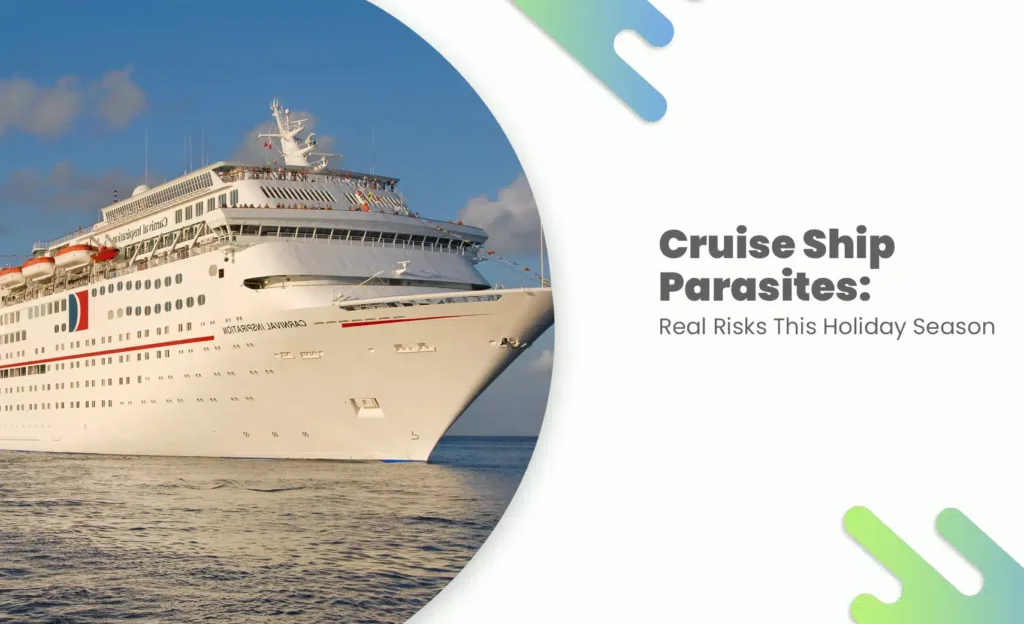
There’s something magical about boarding a cruise in December. Maybe it’s the promise of unplugging. Maybe it’s the buffets. Maybe it’s the idea of drifting between islands while the rest of the world argues over airport queues.
But let’s be honest there’s also something quietly unsettling about thousands of people sharing the same space, plates, pools, and… microbes. Especially when we talk about parasites.
Yep. Parasites. The unwelcome stowaways that don’t need a passport, don’t pay for a cabin, and definitely don’t care that you’re on holiday.
And here’s the thing: cruise ships, for all their luxury and meticulous cleaning systems, are still one of the easiest places for intestinal parasites, pinworms, tapeworms, and skin-burrowing mites to spread. Sounds dramatic, right? But once you look at the science, it’s actually very ordinary.
Why Parasites Thrive on Cruise Ships
You might be wondering how something tiny enough to sit on a grain of dust can turn a luxury voyage into a stomach-wrecking nightmare. But interestingly, cruises create the exact environment parasites adore: humidity, shared surfaces, crowds, kids splashing in pools, adults grabbing buffet tongs every five minutes, and travelers arriving from dozens of countries with dozens of microbial profiles.
It’s not as simple as “wash your hands more.” Parasites like Cryptosporidium can survive chlorine levels that would peel paint. Giardia spreads through contaminated water. And pinworms? They spread through surfaces we touch without thinking of railings, elevator buttons, door handles.
If you could see parasites under UV light, you’d probably start wearing gloves to dinner.

How Parasites Spread on Cruises: Real-World Scenarios
To be honest, most infections don’t come from dramatic outbreaks. They happen in tiny, easily overlooked moments:
- Buffet contamination: One person with microscopic eggs on their fingers handles the serving tongs. Everyone else follows.
- Pool accidents: Even a brief “oops” moment from a toddler introduces chlorine-resistant parasites.
- Cabin cross-contamination: Pinworm eggs survive on sheets, remotes, and bathroom counters.
- Shore excursions: Raw or undercooked seafood sold on beaches can carry tapeworm larvae.
It sounds wild, but it’s all been documented again and again.
Which is why so many travelers return home with “stomach issues,” not knowing it’s actually a parasitic infection brewing quietly.
Are Stomach Issues Linked to Parasites? Here’s the Truth
Post-cruise stomach problems aren’t always indigestion or jet lag. Sometimes they’re early signs of intestinal worms, Giardia, pinworms, or other parasites picked up during the trip.
Common symptoms include:
- Bloating that feels unnatural
- Sudden food sensitivity
- Cramping
- Gas that won’t quit
- Nausea
- Diarrhea that comes and goes
- Itching around the anus, especially at night (classic pinworm sign)
Which brings us to an important related topic…
Pinworm Itching at Night: Causes, Relief, and Prevention
If you’ve ever woken up scratching, especially after travel, it might not be dry skin. Pinworms lay eggs around the anal area at night, causing intense itching.
Cruise cabins, because they’re shared spaces, increase the likelihood of exposure – especially if kids are on board.
Pinworms vs Threadworms: What’s the Difference?
A lot of travelers use these terms interchangeably, but threadworms are the UK name for the same species Americans call pinworms.
Same parasite. Same symptoms. Same embarrassment.
And yes, same risk onboard ships.
How to Deal With Intestinal Worms?
Short answer: get diagnosed early.
Long answer: hygiene changes + medication + patience.
Worm infections rarely resolve on their own, and travel-acquired cases often require prescription anti-parasitic meds.
One such option doctors sometimes choose, depending on the diagnosis, is Wormectin 12mg. It’s talked about often in traveler forums because many parasites respond well to timely treatment with it. Of course, self-medicating isn’t smart; proper diagnosis matters.
But when used correctly and prescribed appropriately, Wormectin 12mg can help clear certain parasitic infections surprisingly fast.
Top 5 Natural Antiparasitic Foods That Really Work
While not strong enough for full-blown infections, foods like garlic, pumpkin seeds, papaya seeds, turmeric, and cloves may support gut health.
They’re not a replacement for medication but they DO make your gut less “inviting” to parasites.
Many cruise travelers swear by eating garlic or cloves after returning home. Does it cure infections? No. Does it help the gut environment? Possibly.
Can Worms Cause Constant Stomach Pain?
Absolutely. Parasites irritate the intestinal lining, disrupt digestion, and sometimes block nutrient absorption.
Chronic, weird stomach pain after a vacation should never be ignored and yes, cruise-related infections are more common than people admit.
Stomach Problems After Traveling
This is one of the top questions travel doctors hear.
Sometimes it’s food poisoning. Sometimes it’s water contamination. But a surprisingly high percentage of persistent digestive issues after a cruise turn out to be parasitic infections.
And that’s where treatment becomes crucial…
Antiparasitic Medication for Humans: Uses & Safety Tips
Here’s the part that gets misunderstood online.
Anti-parasitic medications like Wormectin 12mg, when prescribed correctly, are incredibly effective. But:
- They must match the type of parasite
- They should NOT be used “just in case”
- Dosage varies based on weight and infection type
- Overuse can hide symptoms, making diagnosis harder
To be honest, I’ve met travelers who carry antiparasitic tablets in their luggage “just in case,” but even doctors caution against randomly taking them.
Still, when confirmed parasites are involved?
Medications like Wormectin 12mg can be game-changing.
Understanding Iverguard 12mg: Benefits and Safe Use
Many travelers compare different antiparasitic medicines. Iverguard 12mg often comes up in medical conversations as an option used for a variety of worm infections, similar to how Wormectin 12mg is discussed.
Again, dosage and suitability depend entirely on the diagnosis.
Ivermectin Dosage for Scabies: 9 Facts You Must Know
Scabies isn’t uncommon on cruises, tight spaces, shared linens, constant human contact… It happens.
Oral ivermectin treatments (including formulations equivalent to Wormectin 12mg) are sometimes used in outbreaks, but only under medical guidance.
Natural vs. Medical Treatments for Scabies
In short?
Natural oils may soothe symptoms, but only prescription treatments kill mites effectively.
Cruises occasionally experience scabies clusters, and treatment protocols are strict for this reason.
Can You Get Infected Through Swimming Pools?
Unfortunately, yes.
Certain parasites like Cryptosporidium survive chlorine long enough to infect swimmers, especially kids who accidentally swallow pool water.
One contaminated person can expose dozens.
How to Get Tested for Parasites
If you return from a cruise and can’t shake the digestive weirdness, testing is straightforward:
- Stool sample
- Blood tests (for specific parasites)
- Tape test (for pinworms)
- Sometimes imaging if severe symptoms occur
Early testing = easier treatment = fewer complications.
Parasites in Humans: Types, Symptoms, and Best Treatments
Humans can carry dozens of parasite species, from simple pinworms to stubborn tapeworms to rare tropical invaders. Cruise travel increases exposure because passengers interact with different cuisines, water sources, and hygiene standards at every port.
Treatment varies, but again, options like Wormectin 12mg come up often in standard protocols.
Parasitic Infection: Symptoms, Causes, and Treatments
Cruise infections aren’t always obvious. Some parasites simmer quietly for weeks. Others cause symptoms the first night home.
Understanding how they spread helps prevent them but knowing how they’re treated helps you recover faster.
Why Self-Medicating for Parasites Can Be Dangerous
You wouldn’t believe the number of travelers who guess their diagnosis and take whatever antiparasitic pill they find online.
But misusing medications including Wormectin 12mg can lead to:
- Partial treatment
- Drug resistance
- Masked symptoms
- Complications if the parasite wasn’t the real issue
Always let a doctor confirm the diagnosis.
Street Food and Worms: How to Stay Safe While Eating Out
Port cities are famous for irresistible street snacks. But anything raw, undercooked, or washed with contaminated water can bring parasites straight to your gut.
Enjoy the food, but choose wisely.
Hygiene Mistakes That Lead to Infections
On cruises, these mistakes are shockingly common:
- Touching buffet utensils then eating immediately
- Not washing hands after shore excursions
- Using public restrooms barefoot
- Sharing towels
- Sitting in hot tubs after children
Small habits make a big difference.
Can You Get Scabies From Cats?
Short answer: technically yes, but those mites don’t infest humans long-term. Still, travelers who interact with animals at ports should wash thoroughly afterward.
Does Spicy Food Kill Parasites?
Sadly, no.
If chili peppers cured parasites, doctors would look very different.
Spices may enhance digestion but do not kill established infections.
How Long Can Parasites Survive on Makeup or Brushes?
Longer than you think. And cruises + humidity = perfect survival conditions.
Always sanitize beauty tools after travel.
How Parasitic Infections Mimic Other Illnesses
Parasites often look like IBS, food intolerance, allergies, or even anxiety.
And that’s why so many cases go untreated for months.
Bringing It All Together
Cruises are incredible, relaxing, beautiful, unforgettable. But they also concentrate people in ways nature didn’t design us for, which is why parasite transmission becomes so easy.
Armed with the right info, though, you don’t need to fear it.
You just need awareness, good hygiene, early testing, and proper treatment when needed.
If symptoms appear after a cruise, don’t wait it out, especially if your gut instinct (pun intended) says something’s off. Medication like Wormectin 12mg, when prescribed correctly, can help clear specific infections quickly and safely.
Your vacation should give you memories… not microscopic roommates.
FAQs
1. How do I know if my cruise stomach issues are caused by parasites?
Honestly, it’s not always obvious at first. Parasite symptoms can look like simple indigestion bloating, cramping, gas, fatigue, or weird bathroom changes. If symptoms last more than a few days after your trip, or you notice things like nighttime itching or unexpected weight changes, it’s worth getting tested. A quick stool test normally gives a clear answer.
2. Are parasites on cruise ships actually common?
More common than people think, but not as dramatic as movies make them out to be. With thousands of passengers sharing buffets, pools, and surfaces, parasites like Giardia, pinworms, and Cryptosporidium can spread pretty easily. Most cruise lines do a fantastic job with sanitation but human behavior isn’t always as spotless.
3. Can medication like Wormectin 12mg treat cruise-related parasitic infections?
It can, if it’s the right parasite and if a doctor prescribes it. Wormectin 12mg is commonly used for certain intestinal worms and mite-related infections, but it’s not a one-size-fits-all cure. Always get diagnosed before taking anything, because treating the wrong parasite (or misdiagnosing yourself) can make recovery slower.
4. Can I prevent getting parasites while on a cruise?
Absolutely. Small habits matter: wash your hands before eating, avoid swallowing pool or hot tub water, be cautious with raw or buffet foods, sanitize your cabin surfaces, and stay mindful during port excursions. Prevention sounds boring, but it really does save you from the “mystery stomach” vacation hangover.
5. Should I worry about scabies on cruise ships too?
Scabies can occasionally pop up on ships, mostly because people are packed into shared cabins, lounges, theaters, and pool areas. It’s not the most common issue, but it happens enough that doctors mention it. A rash that spreads quickly, especially with nighttime itching, is a red flag. If that ever happens, early treatment is key.