
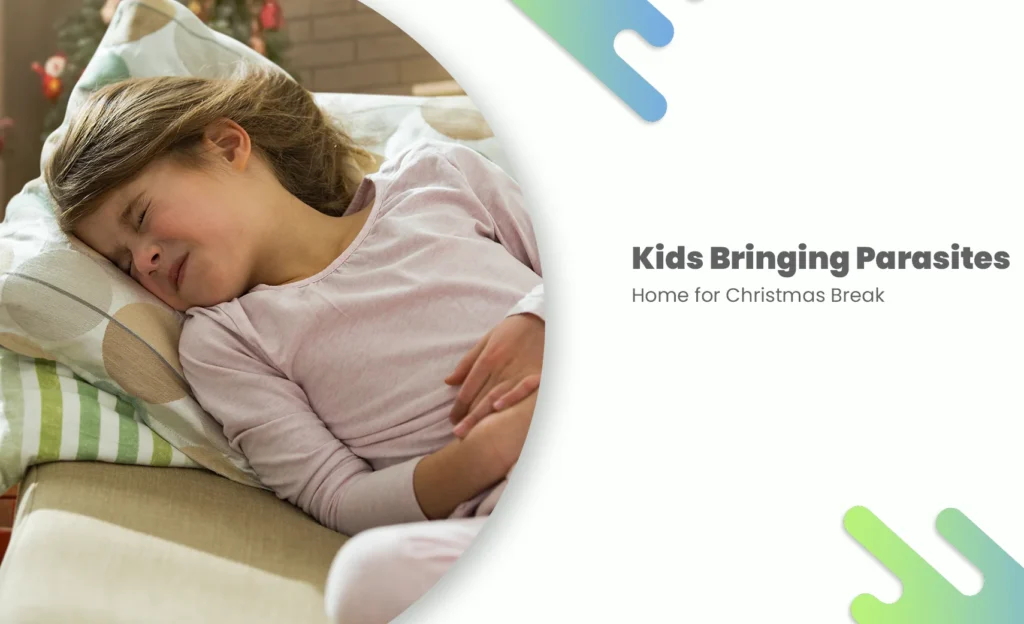
There’s this funny thing about Christmas break. One moment you’re busy hanging up stockings and trying to remember if you wrapped everything you bought, and the next… your kid is scratching their head like they brought home more than just handmade ornaments.
I know, nobody wants to talk about kids bringing parasites home for the holidays. It sounds dramatic, maybe even slightly gross. But let’s be real, it’s ridiculously common. And honestly, every year around the end of December, pediatricians quietly brace for impact.

The mix of crowded classrooms, winter jackets that never quite dry, shared headphones, half-washed hands (kids are honest creatures), sleepovers, and school holiday parties? It’s practically a welcome mat for tiny uninvited guests.
Interestingly, parasites don’t care that your home smells like pine and cinnamon. They hitch a ride anyway. And to be honest, many families don’t even realize what’s happening until someone in the house starts feeling “off” – or itching in places you don’t want to itch.
So… what exactly are kids bringing home?
Most parents assume we’re talking about head lice – and sure, lice are the classic stars of the school-break horror show. But winter brings a whole cast of microscopic characters: pinworms, intestinal worms, scabies mites, and the occasional stomach bug that turns into something more complicated.
Sounds weird, right? But kids touch everything. Floors, walls, glue sticks… each other. If a parasite wants a ride, a school hallway is basically first-class tickets.
Back when I first covered a story about community outbreaks in elementary schools, a nurse told me, “If five kids have worms, twenty probably do. Their parents just don’t know yet.” That stuck with me. It’s not meant to scare anyone. It just means awareness matters more than panic.
Why December and January Suddenly Feel Like Parasite Season
You might be wondering why these critters show up more during Christmas break. After all, it’s freezing out – shouldn’t parasites die off?
Here’s the thing: most human parasites don’t care about the weather as much as they care about indoor behavior.
Winter =
• more indoor crowding
• less ventilation
• more shared items
• disrupted hygiene routines
• travel (airports are parasite theme parks, let’s be honest)
And because kids aren’t at school for two weeks, symptoms that were quietly building suddenly become obvious at home.
A surprising number of parents report noticing things like unusual scratching, new digestive issues, or red patches on the skin around this time. It’s not as simple as you think – it’s not about poor hygiene; it’s about how easily transmission happens in shared spaces.
During my research this year, I came across families who swore they did “everything right,” yet still ended up dealing with pinworms by New Year’s Eve. That said, don’t beat yourself up if it happens. Parasites are opportunistic, not judgmental.
How Parasites in Humans Become a Whole-Family Affair
Here’s where things get tricky: parasites rarely infect just one person in a household.
If one child brings something home, it spreads quietly – especially during winter break when everyone’s bundled up in blankets and sharing couches for movie marathons.
This is honestly why some pediatricians advise treating all family members together, even if only one child shows symptoms. It prevents the frustrating re-infection cycle parents complain about every January.
I remember reading a parent forum once where someone wrote, “We treated our daughter three times. Turns out my husband had mild symptoms but ignored them.” And… yep. That’s how it happens.
It also doesn’t help that symptoms can mimic allergies, stress, or simple stomach upset. Sometimes the signs are so subtle you’d never guess.
When Parents Reach for Medication (and Where Iverlast 12Mg Fits In)
At some point, families start looking for solutions. That’s when medicines like Iverlast 12Mg enter the conversation. And yes, despite the holiday chaos and comfort food, antiparasitic treatments actually become surprisingly common this season.
I’ve spoken to clinicians who say they get a spike in questions about Iverlast 12Mg every holiday break – mostly from parents who want something effective and fast. It can be part of a treatment plan for certain parasitic infections, especially when things spread quickly in households.
But here’s the thing (and I say this as someone who’s written about infectious diseases for years): don’t self-medicate blindly. Even with widely used meds like Iverlast 12Mg, dosage and timing matter. And every case, especially with kids, deserves proper guidance.
Interestingly, some adults also end up needing Iverlast 12Mg because they catch the same infection their children brought home. Parasites really don’t discriminate.
So yes, it’s a tool – but one to use responsibly. Think of Iverlast 12Mg as part of the cleanup plan, not the entire strategy.
What Parents Usually Miss (And What Doctors Wish They Knew)
To be honest, most families assume parasites come from “dirty” environments. That’s a myth. Suburban schools, fancy preschools, posh holiday camps – parasites don’t care about your zip code.
A friend of mine who teaches kindergarten once said, “The cleanest-looking kids can still spread the most interesting germs.” She wasn’t wrong.
Some overlooked sources include:
- shared headphones in classrooms
• school library bean bags
• holiday costume boxes
• gym mats
• sleepover blankets
• airport hotel carpets
And let’s not forget pets. Even though some parasites are species-specific, families often confuse symptoms and blame the dog – when actually the school was the real starting point.
If you think your kid brought home more than holiday crafts this year, don’t panic. But don’t ignore it, either.
The Testing Question Parents Google at Midnight
One of the biggest concerns I hear from readers is this: How do I know what we’re dealing with?
This is where the concept of How to get tested for parasites becomes surprisingly important. Pediatricians can guide you, but stool tests, tape tests, and skin evaluations are often used depending on the symptoms.
Some parents wait too long. I get it. The holidays are chaotic. But if something feels off – especially itchiness at night, unexplained rashes, or stomach discomfort – take action.
And yes, I’ll say it again: don’t rely on guesswork. Proper diagnosis matters more than jumping straight to meds like Iverlast 12Mg, even though many consider it a reliable option.
Remember, How to get tested for parasites isn’t just a question – it’s a step in preventing the whole house from going through a month of misery.
The Real Problem
While researching winter parasite spikes, I kept stumbling on related issues parents often don’t think about. Stuff like how some seasonal skin infections mimic early scabies, how head lice quietly evolve through their life cycle in classrooms, or how intestinal worms cause those vague stomach complaints many parents brush off.
There’s also the tricky distinction between scabies and eczema – something dermatologists say leads to misdiagnosis all the time during winter.
And travel brings its own troubles. Traveler’s diarrhea, airport-transmitted infections, even bizarre cases where parasites cling to fabrics for days. One tropical disease expert told me cases of worms picked up from international vacations have been rising steadily during the holidays because people let their guard down.
Oh – and here’s something I didn’t expect: some kids come back with skin issues caused by microscopic mites that live around the eyes and eyebrows. It reminded me of reports on facial mite overgrowth and how winter dryness makes it worse.
These connections don’t mean your kid has every parasite ever discovered. It just highlights how wide the category is – and why a holistic approach matters.
Prevention: Not Perfect, But Practical
Let’s be real, you can’t bubble-wrap your kids or sterilize the entire school system. But there are some things that genuinely help reduce transmission:
- Wash bedding immediately after kids return home
• Remind them to avoid sharing hats, scarves, hairbrushes
• Keep nails short
• Sanitize headphones (surprisingly effective)
• Encourage handwashing before meals and after play
Small steps, but meaningful ones.
And yes, if someone in the house gets infected, following the full treatment plan – whether it involves Iverlast 12Mg or something else – is crucial. Half-treating a parasite is like half-swiping a dirty kitchen counter: it feels helpful, but the germs don’t care.
Kids Aren’t the Problem… Awareness Is
You might be wondering if all this is just part of childhood – and in some ways, yes. Parasites have been around as long as humans have. What matters is not fear but preparation.
Understanding how Parasites in Humans behave, spread, and hide is honestly empowering. Families who know the early signs avoid months of reinfection. Households who communicate openly catch symptoms sooner. And parents who take their kids’ complaints seriously tend to resolve issues faster.
As someone who writes about this stuff for a living, I can tell you this: winter parasite season isn’t going anywhere. But neither is our ability to manage it.
And hey, if nothing else, maybe this is your reminder to quietly check everyone’s hair tonight. Just in case.
Because the only guests you really want to entertain this Christmas are the ones who show up with cookies – not microscopic creatures with six legs or an affinity for human intestines.
FAQs
- Can kids really bring parasites home from school or holiday activities?
Absolutely, yes. Schools, buses, sleepovers, and even shared winter clothing make it super easy for parasites to move from one child to another. It doesn’t mean a child is “unhygienic” – parasites just thrive in places where kids interact closely. - How do I know if my child needs treatment with something like Iverlast 12Mg?
Only a healthcare provider can confirm this. Symptoms like night-time itching, belly discomfort, or unexplained rashes might point toward a parasitic infection, but testing first is the safest route. Never start Iverlast 12Mg or any antiparasitic medication without proper medical guidance. - Do all family members need treatment if one child is infected?
Often, yes. Parasites spread quietly, and by the time one child shows symptoms, others may already be exposed. Many pediatricians recommend evaluating (or sometimes treating) the entire household to avoid a frustrating cycle of reinfection. - How do I prevent parasites from spreading during Christmas break?
You can’t create a parasite-proof home, but washing bedding, cleaning shared spaces, reminding kids not to share hats or scarves, and keeping nails short go a long way. Good hand hygiene – especially after travel – is honestly one of the most effective barriers. - Should I get my child tested if I’m unsure what parasite they might have?
Yes. When symptoms are unclear, learning how to get tested for parasites is incredibly helpful. Stool tests, tape tests, or skin checks can confirm what’s going on. Proper testing prevents guesswork, unnecessary medication, and weeks of household stress.