
Most people don’t come back from vacation expecting a health mystery.
They return with sunburns that fade, photos they promise to post, and maybe a lingering sense that they should’ve stayed longer. But in 2025, a different kind of souvenir is showing up more often in inboxes, clinics, and late-night Google searches: digestive symptoms that don’t quite make sense after a stay at a Mexican resort.
I started noticing the pattern earlier this year. Not headlines. Not official alerts. Just emails. Readers asking why their stomach still felt “off” weeks after returning from Cancún. Parents asking why their child couldn’t shake fatigue. Couples comparing notes and realizing they were both unwell in eerily similar ways.
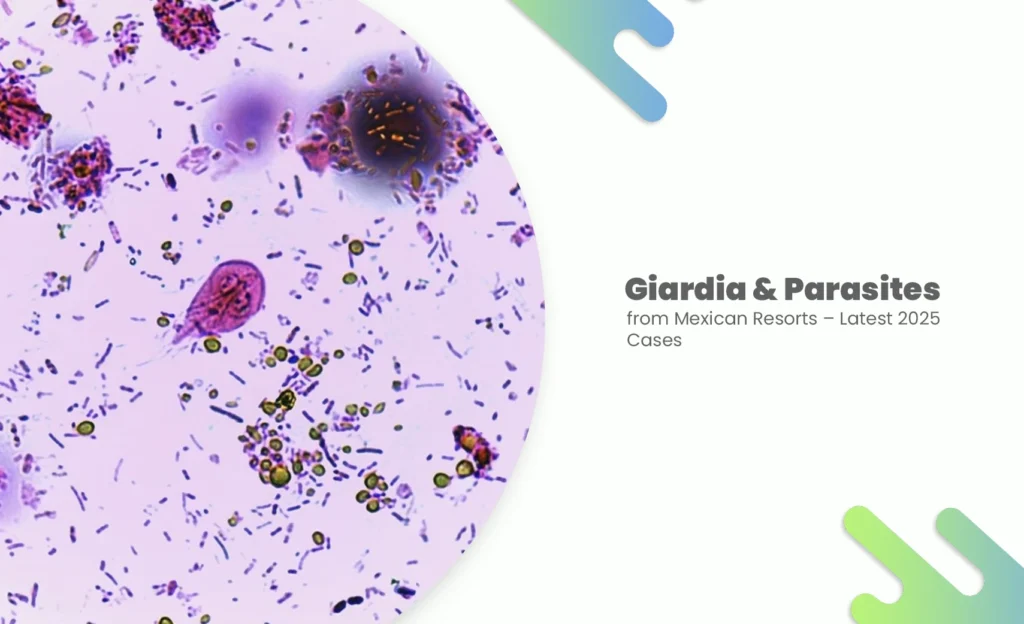
The word that kept surfacing – often hesitantly – was Giardia.
Why Resort Travel Doesn’t Mean Zero Parasite Risk
There’s a strong belief that parasites are something you encounter while backpacking, eating sketchy street food, or drinking from the wrong tap. Resorts, in contrast, feel sealed. Controlled. Safe.
But parasites don’t respect boundaries drawn by branding or star ratings.
In reality, many of the same risk factors exist inside resorts, just in subtler forms. Shared water systems. High-volume food preparation. Produce sourced locally. Pools used by hundreds of people daily. Even meticulous hygiene protocols can be strained when occupancy is high – and in 2025, occupancy is very high.
This is why conversations around parasites in humans and how they’re actually transmitted are becoming more relevant for mainstream travelers, not just adventurers.

The Stomach Problems That Refuse to Resolve
One of the most common messages I get starts the same way:
“I assumed it was just travel stomach.”
And that assumption makes sense. Travel disrupts routine. Diet changes. Alcohol intake increases. Sleep patterns collapse. But stress-related stomach issues usually settle once normal life resumes.
Giardia doesn’t.
Instead, symptoms linger. Bloating that feels excessive. Loose stools that aren’t dramatic enough to alarm you – but persistent enough to annoy you. Gas. A strange sense that food isn’t agreeing with you anymore. This is where many people start wondering whether stomach issues can actually be linked to parasites, even if everything felt fine on the trip itself.
The frustrating part? These symptoms mimic other conditions so convincingly that both patients and doctors sometimes look elsewhere first.
When Parasites Masquerade as Something Else
Giardia is particularly good at pretending to be other things.
IBS.
Food intolerance.
Anxiety-related gut issues.
Post-travel stress.
I’ve spoken to travelers who eliminated dairy, gluten, sugar – entire food groups – before anyone suggested parasite testing. This overlap is why experts increasingly talk about how parasitic infections mimic other illnesses, especially digestive disorders common in Western countries.
By the time parasites are considered, weeks or months may have passed.
“But We Never Left the Resort”
This is often said with disbelief.
People recount how carefully they avoided tap water. How they stuck to buffet food. How they didn’t eat off-property. Yet Giardia doesn’t require recklessness. It requires exposure, and exposure can happen through ice, rinsed produce, shared utensils, or even accidental swallowing of pool water.
Resorts aren’t negligent – they’re complex ecosystems. And when thousands of guests cycle through the same systems, even minor lapses can ripple outward.
This reality mirrors broader discussions about common hygiene habits that unknowingly spread infections, even in places that appear spotless.
Why Testing for Parasites Is Often Delayed
Another recurring theme I hear: hesitation.
People don’t want to ask for parasite tests. It feels extreme. Embarrassing. Overdramatic. Some worry they’ll sound paranoid.
But here’s the truth – doctors who treat post-travel patients see this all the time. Testing is not an accusation. It’s a process of elimination. And knowing how doctors actually test for parasites after travel can save weeks of uncertainty.
Stool tests aren’t glamorous, but they’re effective. And once there’s clarity, treatment becomes far more straightforward.
Where Treatment Conversations Start Getting Noisy
This is where the internet complicates things.
Once Giardia or another parasite enters the conversation, people start searching. Forums. Reddit threads. Social media comments. Medication names get tossed around without context. One that comes up repeatedly is Ivernock 12 mg, often mentioned by travelers trying to understand treatment pathways after diagnosis.
To be clear, no medication is universal. Giardia, worms, and other parasites require different approaches. But the reason Ivernock 12 mg keeps appearing in these conversations is because people are desperate for certainty when symptoms linger.
And desperation thrives in information gaps.
Why Self-Treating Without Confirmation Can Backfire
One of the more concerning trends I’ve noticed is people jumping to treatment before testing. It’s understandable – nobody wants to wait when they feel unwell – but it’s risky.
Treating the wrong parasite, or treating without confirmation, can delay proper care. It also feeds into the growing concern among clinicians about why self-medicating for parasites can be dangerous, even when intentions are good.
This is especially important when medications like Ivernock 12 mg are discussed outside medical supervision, stripped of nuance and context.
A Personal Moment That Changed How I See These Stories
Years ago, I brushed off lingering digestive symptoms after travel. I told myself I was stressed. Busy. Overthinking.
I wasn’t.
The eventual diagnosis wasn’t dramatic, but the months of uncertainty were exhausting. That experience reshaped how I listen to readers now. It’s why I don’t dismiss questions about treatment options or curiosity around drugs like Ivernock 12 mg – not because everyone needs it, but because curiosity often comes from discomfort that’s being ignored.
Why 2025 Feels Like a Tipping Point
Doctors describe this year as a catch-up phase. Delayed travel. Delayed diagnoses. More people finally asking questions they postponed during the pandemic years.
At the same time, misinformation spreads fast. Medication names circulate without explanation. People confuse Giardia treatment with worm treatment. Context gets lost.
That’s how Ivernock 12 mg sometimes ends up discussed alongside Giardia, even though its role depends entirely on the specific parasite involved.
Understanding why something is prescribed matters just as much as knowing what it is.
The Emotional Weight People Don’t Talk About
Parasites carry shame.
People feel dirty. Embarrassed. Like they failed at being careful. This silence is part of why infections linger longer than they should. Nobody wants to be “that person” who brings parasites into conversation.
But travel-related infections aren’t moral judgments. They’re biological events. And acknowledging that reality helps people seek care sooner instead of spiraling through doubt and self-blame.
Prevention Without Fear or Obsession
You don’t need to avoid resorts. You don’t need to sanitize everything in sight.
You do need awareness.
Avoid swallowing pool water.
Wash hands more often than feels necessary.
Be mindful of ice during peak occupancy seasons.
Pay attention to what your body is telling you after you return.
This balanced approach mirrors broader public-health advice around parasite prevention without paranoia, something travel medicine specialists emphasize repeatedly.
When Treatment Becomes Part of the Journey
If testing confirms a parasite, treatment is usually effective. Recovery may take time, but clarity itself is a relief.
In cases involving certain parasites, medications like Ivernock 12 mg may be discussed as part of a medically guided plan – not as a shortcut, but as a targeted tool.
What matters most is that treatment follows diagnosis, not online guesswork.
Listening Earlier, Recovering Faster
One thing doctors agree on: people who seek help recover faster. Not because parasites are scarier later – but because prolonged inflammation takes a toll.
That’s why conversations around Ivernock 12 mg and similar medications should always be anchored in testing, context, and professional guidance. The medication itself isn’t the story. Timing is.
Final Thoughts: Resorts Aren’t the Villain – Silence Is
Mexico remains one of the most beloved travel destinations in the world, and for good reason. Resorts aren’t dangerous by default. Giardia isn’t inevitable.
But pretending the risk doesn’t exist helps no one.
If symptoms linger after travel, don’t minimize them. Don’t shame yourself. And don’t rely solely on forums to guide decisions about medications like Ivernock 12 mg.
Travel enriches life. Sometimes it also challenges the body. The key is responding with curiosity instead of denial – and with care instead of panic.
That’s how trips stay memorable for the right reasons.
FAQs
1. If I got Giardia from a resort, does that mean the place was unsafe or dirty?
Not necessarily. Resorts handle huge volumes of food, water, and people every day. Even well-managed places can have brief lapses or shared-system issues that guests never see. Getting a parasite isn’t proof that a resort failed – it’s often just an unfortunate overlap of timing and exposure.
2. My stomach issues started weeks after I got home. Is that normal?
Yes, and it’s one of the most confusing parts. Giardia and similar parasites don’t always cause immediate symptoms. Many people feel fine on the trip and only notice problems once they’re back in their regular routine. That delay is why infections often go undiagnosed for so long.
3. How do I tell the difference between parasites and “just travel stress”?
It’s hard – because they can feel almost identical at first. The clue is persistence. Stress-related gut issues usually improve as life normalizes. If symptoms hang around, fluctuate strangely, or don’t respond to diet changes, that’s a sign something else may be going on.
4. Is it awkward or embarrassing to ask a doctor for parasite testing?
It can feel awkward, but doctors genuinely don’t see it that way. Travel-related infections are common, especially after trips to warm, high-traffic destinations. Asking directly actually helps them get to answers faster – it’s not overreacting, it’s being specific.
5. If treatment is needed, does that mean recovery will take a long time?
Not usually. Once the right cause is identified, treatment tends to work well. Some people feel better quickly, while others need a bit more time for their digestive system to settle. The biggest delays usually come from waiting too long to get checked, not from the treatment itself.