
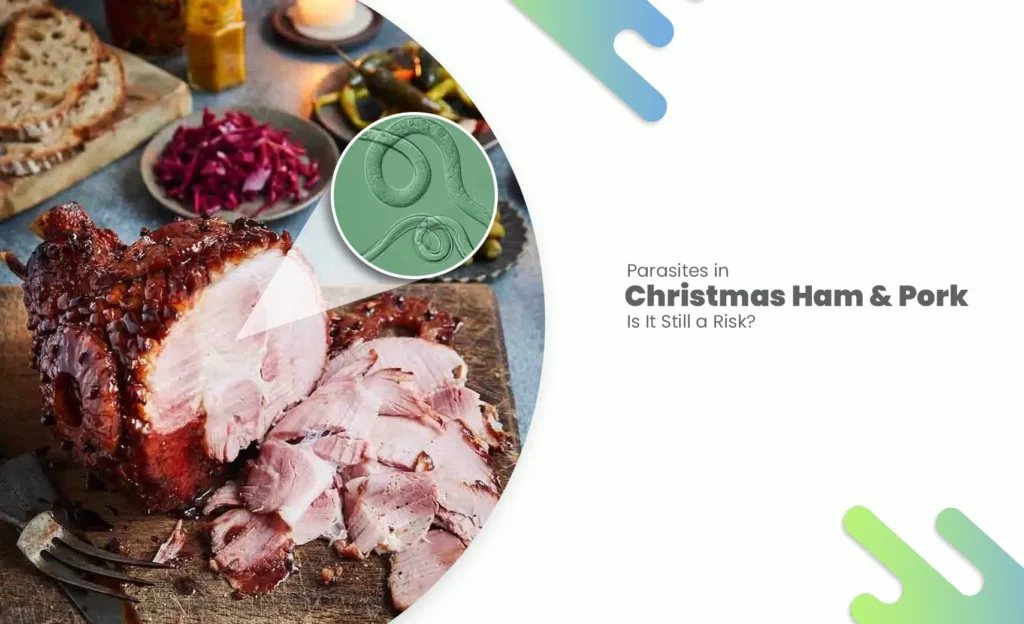
Every December, food fears resurface in familiar ways. The turkey gets side-eyed, leftovers get debated, and pork – especially Christmas ham – quietly returns to the suspect list.
I’ve heard it at dinner tables myself. Someone mentions parasites. Someone else laughs it off. Then, just for a second, there’s hesitation before the next slice is served.
What’s interesting is that this fear persists even as food safety has transformed completely. And that tension – between old risk and modern reality – is where the real story lives.

Pork, Parasites, and the Long Memory of Food Fear
Pork didn’t earn its reputation out of superstition. Historically, it was dangerous when raised and prepared under poor conditions. Parasites like Trichinella spiralis were once common because pigs were exposed to raw waste, rodents, and uncontrolled environments.
That history matters – but only up to a point.
Modern pork production in the US and UK operates under veterinary surveillance, regulated feed systems, and mandatory inspection. The parasites people still associate with pork haven’t vanished entirely, but they’ve been pushed to the margins.
The problem is that public memory doesn’t update as fast as public health.
When Symptoms Don’t Look Like an Infection
One reason parasite anxiety lingers is that real infections rarely look the way people expect.
Instead of dramatic illness, symptoms tend to blend in:
- vague digestive discomfort
- muscle soreness
- lingering fatigue
- intermittent nausea
- skin irritation that doesn’t quite make sense
These signs overlap with dozens of non-parasitic conditions, which is why parasitic illness often goes unnoticed or misattributed.
When doctors do confirm a parasitic infection, treatment decisions are targeted. In some cases, medications such as Albendazole 400mg Tablet are prescribed based on the identified organism, not on suspicion or exposure alone.
That distinction is critical.
Why Christmas Increases Exposure Without Changing the Food
What actually changes during holidays isn’t the pork – it’s behavior.
More people in close quarters. Children moving between homes. Shared bathrooms. Shared food. Less attention to hygiene between meals. Travel across regions and countries.
These conditions increase exposure potential for many infections, parasitic included. And symptoms often appear weeks later, long after Christmas dinner is a memory.
That’s why outbreaks don’t peak during the holidays – they surface afterward.
Food Isn’t the Only Exposure Point
It’s tempting to blame a single food because it feels controllable. Avoid the ham, avoid the risk.
But parasites rarely spread that cleanly.
Cross-contamination, reused utensils, unwashed hands, shared towels, poorly cleaned surfaces – these everyday habits account for far more transmission than one properly cooked meal.
The irony is that people often focus on food while ignoring the behaviors that actually sustain infections.
Cooking Pork Properly Is Still the Strongest Defense
Parasites do not survive sufficient heat. This is settled science.
Most commercially sold Christmas ham is already fully cooked. Reheating it to safe internal temperatures effectively neutralizes remaining theoretical risk. Problems arise when:
- cured meat is assumed to be cooked
- raw and cooked foods share surfaces
- specialty or imported products bypass inspection
- tasting occurs mid-preparation
None of this is dramatic, which is why it’s often overlooked.
Why Street Food Gets a Pass but Holiday Pork Doesn’t
There’s a strange contradiction in how people assess risk.
Many will eat street food while traveling – sometimes in countries with less regulated food systems – without hesitation. Yet the same person may distrust a fully cooked Christmas ham prepared in their own kitchen.
This isn’t about logic. It’s about cultural memory.
Risk perception often has little to do with probability and everything to do with narrative.
When Treatment Becomes Part of the Conversation
Here’s where misinformation does real harm.
People who worry about parasites sometimes jump straight to medication, assuming prevention is better than confirmation. It isn’t.
Antiparasitic drugs exist for a reason, and when used appropriately, they’re effective. In confirmed cases, clinicians may prescribe Albendazole 400mg Tablet as part of a defined treatment course – after testing, evaluation, and diagnosis.
Using medication without confirmation doesn’t reduce risk. It introduces unnecessary side effects and masks real symptoms.
Home-Cured, Wild, and Specialty Pork Deserve Separate Rules
This is where nuance actually matters.
Wild boar, backyard pork, and home-cured products operate outside the safeguards of industrial inspection. These foods aren’t inherently unsafe, but they require stricter preparation standards and longer curing or cooking times.
Treating them like supermarket ham is where mistakes happen.
Risk isn’t eliminated by belief – it’s reduced by process.
Why Pork Became the Scapegoat
Blaming pork is easier than confronting habits.
It’s easier than acknowledging that:
- hygiene slips during holidays
- symptoms get ignored
- online advice replaces medical evaluation
- fear spreads faster than facts
From a public health perspective, parasites thrive in systems that break down – not in specific foods.
And when treatment is needed, medications like Albendazole 400mg Tablet are tools – not shortcuts.
When You Should Actually See a Doctor
Not because you ate pork.
But if you experience:
- persistent digestive symptoms
- unexplained muscle pain
- fatigue that doesn’t resolve
- symptoms following travel
- illness that doesn’t respond to routine treatment
That’s when testing matters. At that stage, clinicians may discuss treatment options, which can include Albendazole 400mg Tablet, depending on what’s identified.
Diagnosis comes first. Always.
The Modern Reality of Parasites and Food Safety
Parasites haven’t disappeared – but their role in modern illness has shifted.
They’re less about dramatic foodborne outbreaks and more about subtle, often overlooked infections linked to hygiene, travel, and environmental exposure.
Christmas ham remains a symbol because symbols are easier to fear than systems.
Final Perspective
I still eat Christmas ham. So do most infectious disease specialists I’ve interviewed.
The difference isn’t fearlessness – it’s understanding.
Food safety works best when it’s boring. Medicine works best when it’s precise. And holidays work best when myths aren’t invited to the table.
When parasites truly require treatment, medications such as Albendazole 400mg Tablet have a clear, evidence-based role. But fear-driven prevention isn’t part of that equation.
Understanding risk – not exaggerating it – is how people actually stay safe.
FAQs
1. Be honest – should I be worried about parasites when eating Christmas ham?
Honestly? For most people, no. If the ham is commercially produced and properly reheated, the risk is extremely low. The fear around pork mostly comes from older generations and historical issues that don’t really apply to how food is produced today. If you’ve been eating holiday ham for years without problems, that’s not luck – it’s modern food safety doing its job.
2. If parasites from pork are rare now, why do people still get infected at all?
Because parasites don’t always come from one dramatic meal. They usually show up through everyday things – travel, poor hand hygiene, contaminated produce, or close contact in shared spaces. Pork gets blamed because it has history, not because it’s the most common source today.
3. Would I know right away if I picked up a parasite?
Not necessarily – and that’s what confuses people. Symptoms can be subtle and slow: feeling run-down, mild stomach issues, muscle aches that don’t make sense. That’s why people often don’t connect the dots or assume it’s stress, food intolerance, or “just a bug.” If something feels off for weeks, that’s when checking in with a doctor actually matters.
4. Is it smart to take deworming medicine just in case?
This is where people accidentally make things worse. Taking antiparasitic medication without knowing you need it doesn’t protect you – it can mask symptoms or cause side effects you didn’t need in the first place. These medicines work well when they’re used for the right reason, not as a precaution after a normal meal.
5. What’s the one thing that actually lowers parasite risk during the holidays?
It’s not skipping pork. It’s boring, unglamorous stuff: washing your hands, keeping raw and cooked foods separate, reheating leftovers properly, and not cutting corners because you’re tired or hosting. Most infections happen when routines slip, not because of one “bad” food choice.