
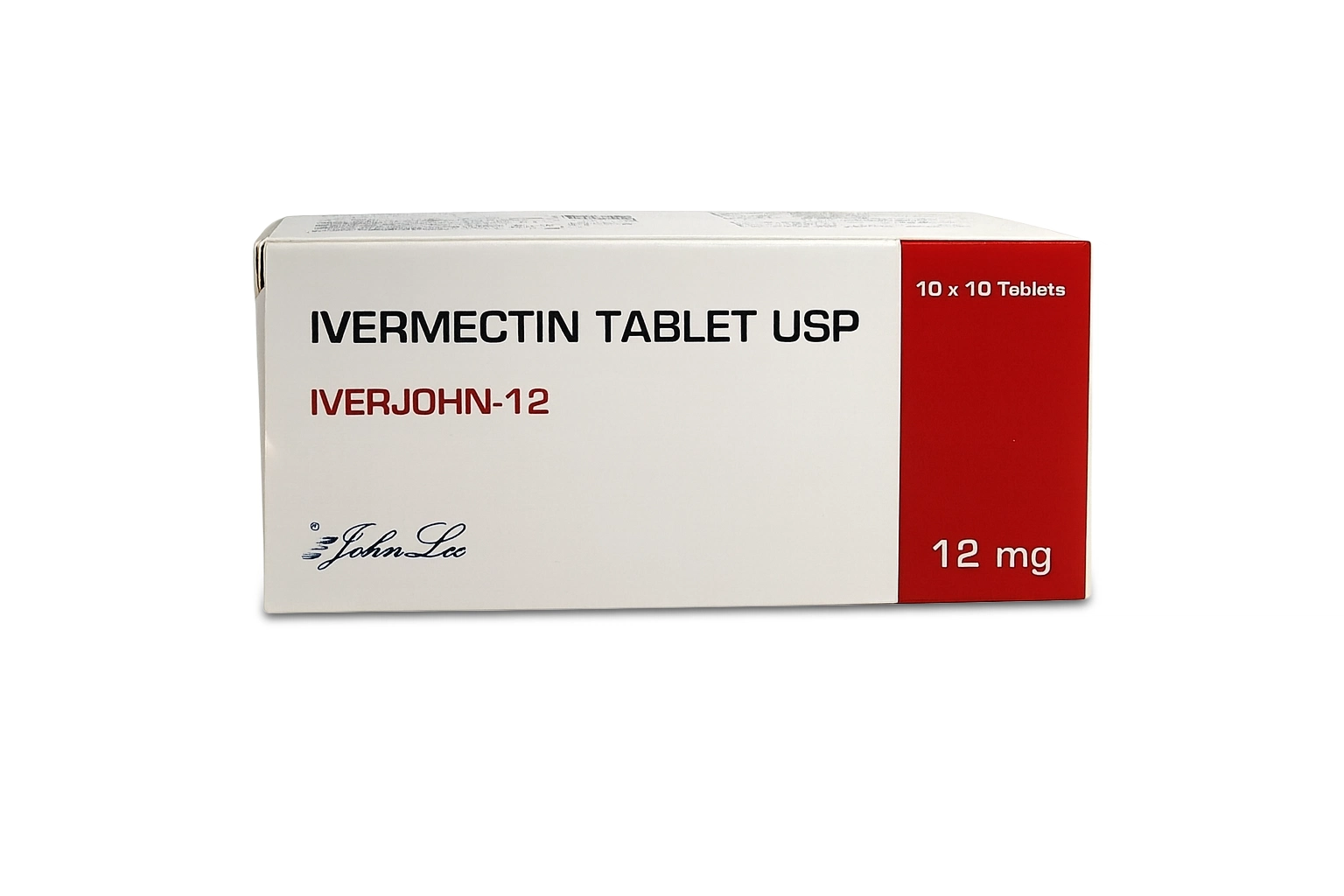
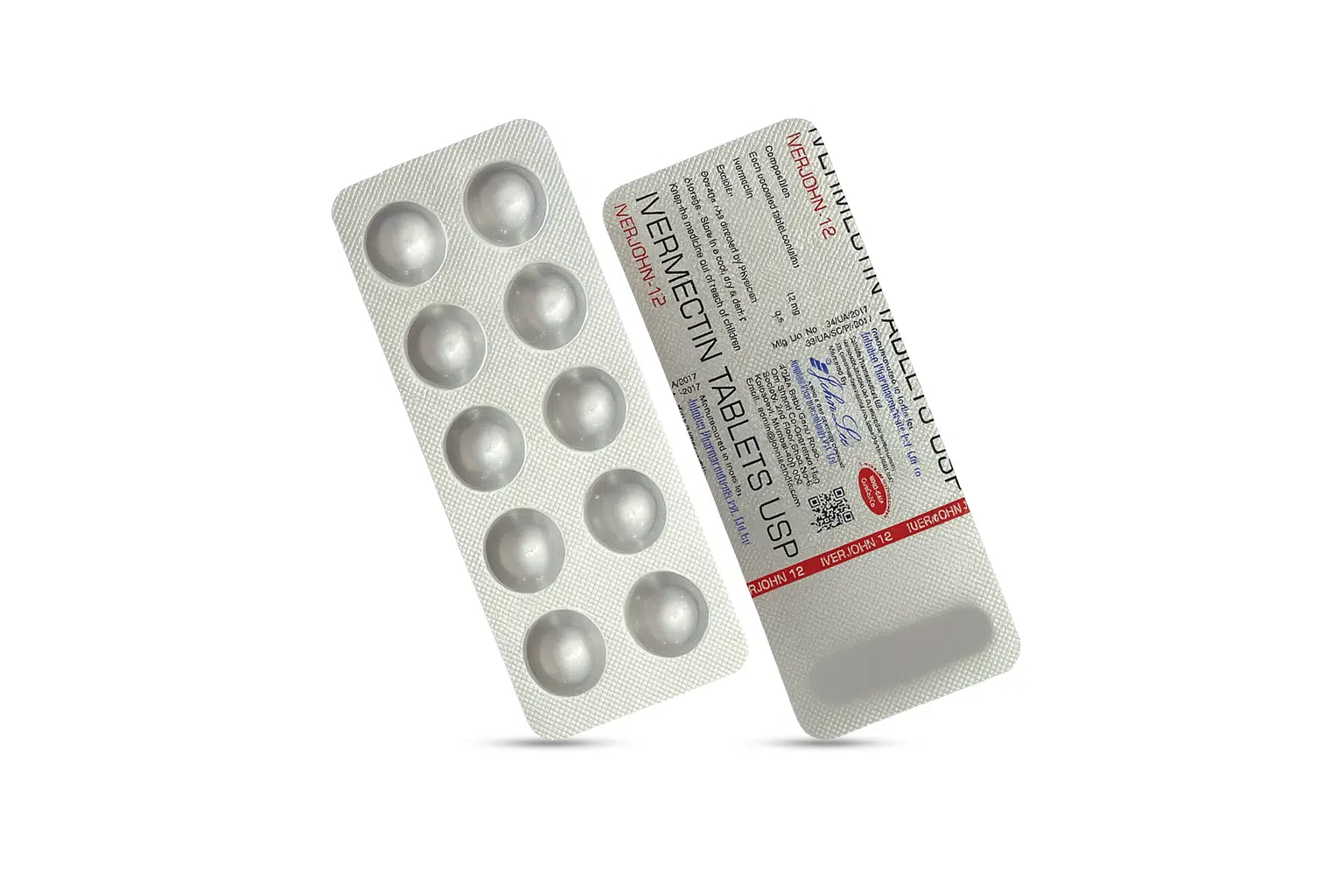
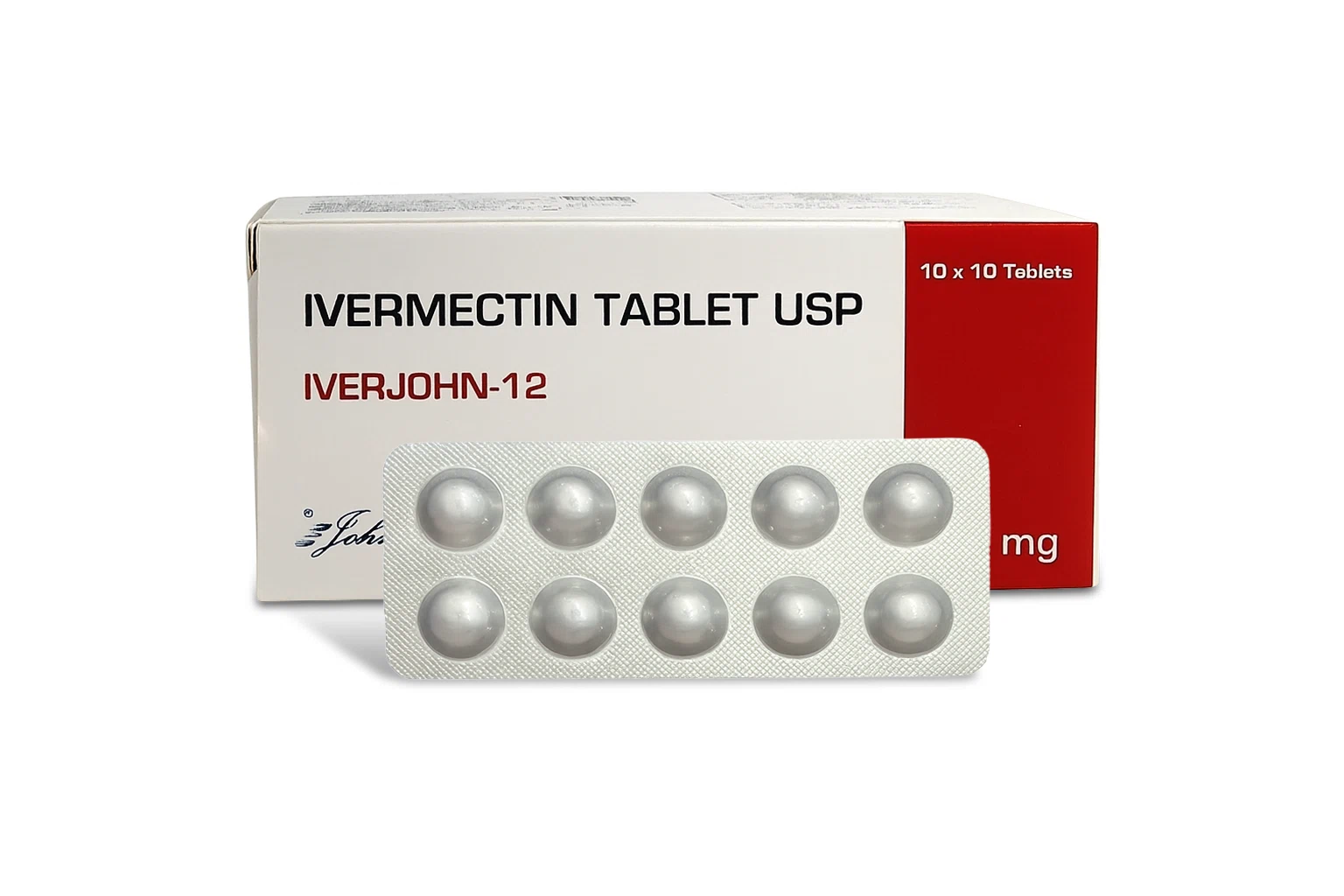
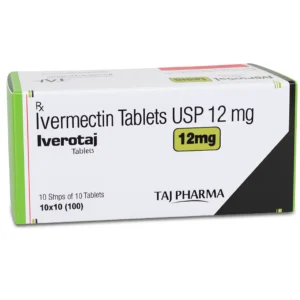
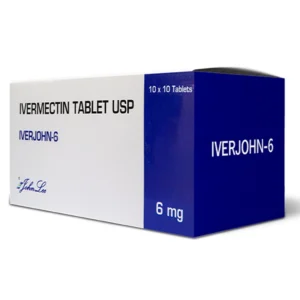
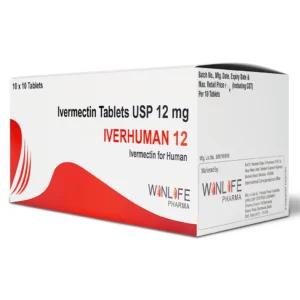
Iverjohn 12 mg is an antiparasitic drug utilized for the treatment of different parasitic infections. Ivermectin is a semi-synthetic derivative of avermectin, a compound extracted from the fermentation of the bacterium Streptomyces avermitilis. It is indicated for the treatment of onchocerciasis (river blindness), Strongyloidiasis, and other parasitic infections.
Key Features
| About Iverjohn 12 mg |
|---|
| Drug Class: Antiparasitic |
| Subclass: Avermectin |
| Product Details | |
|---|---|
| Composition | Active ingredient: Ivermectin Inactive ingredients: • Microcrystalline cellulose • Magnesium Stearate • Colloidal Silicon Dioxide • Croscarmellose Sodium • Pregelatinized Starch |
| Packaging Type | Strips |
| Pack Size | 10×10 |
| Dosage | 12 mg |
| Therapeutic Class | Antiparasitic agent |
| Action Class | Glutamate-gated chloride channel agonist |
| Chemical Class | Avermectin derivatives |
| Manufacturer | Johnlee Pharmaceuticals Pvt Ltd |
| Shelf Life | 2–3 years from the date of manufacturing |
| Usages | Treats parasitic infections such as strongyloidiasis, onchocerciasis, scabies, and other parasitic infections. |
| Country of Origin | India |
| Storage | Store between 15°C–30°C away from direct sunlight and moisture. |
How does Iverjohn 12 mg work?
Ivermectin binds to glutamate-gated chloride channels in parasites, which increases permeability leading to hyperpolarization, paralysis, and ultimately death of the parasite.
- Binding to Glutamate-Gated Chloride Channels: Ivermectin binds to glutamate-gated chloride channels in the nerve and muscle cells of the parasite.
- Increased Permeability: The binding increases cell membrane permeability to chloride ions, causing the cell to take in chloride ions.
- Hyperpolarization: The heightened influx of chloride ions hyperpolarizes the cell membrane, making it challenging for the parasite’s nerves and muscles to function.
- Paralysis and Death: The parasite’s failure to operate adequately causes paralysis and eventually death.
Usage
Iverjohn 12 mg is used for the treatment of:
- Onchocerciasis (river blindness)
- Strongyloidiasis
- Scabies
- Infestation by lice
Dosage
- Onchocerciasis: 150-200 mcg/kg.
- Strongyloidiasis: 200 mcg/kg as a single dose.
- Scabies: The dose is 200 mcg/kg as a single dose, repeated after 1-2 weeks if necessary.
Other Strength of Iverjohn Medication
Side Effects
- Nausea
- Vomiting
- Diarrhea
- Dizziness
- Headache
- Severe skin reactions (rare)
- Liver damage (rare)
- Seizures (rare)
Interactions
- Blood thinners: Ivermectin can enhance the risk of bleeding when co-administered with blood thinners like warfarin.
- Certain antibiotics: Ivermectin can interact with some antibiotics like azithromycin or clarithromycin, perhaps heightening the risk of adverse effects.
- Anticonvulsants: Ivermectin can interact with anticonvulsants like valproic acid, perhaps altering its effectiveness or heightening the risk of adverse effects.
- Other drugs: Ivermectin has the potential to interact with other drugs, such as some antifungals, antivirals, and anti-anxiety drugs.
Pharmacokinetics
- Absorption: Absorption of ivermectin is slow following oral intake, with the peak plasma levels being achieved within 4-5 hours.
- Distribution: Ivermectin is extensively distributed in the body with maximum concentrations in the liver and adipose tissues.
- Metabolism: Ivermectin is heavily metabolized in the liver by the cytochrome P450 enzyme system, mainly.
- Elimination: Ivermectin is mainly excreted in the feces and to a lesser extent in the urine. The half-life of ivermectin is around 18 hours.
Iverjohn 12 mg represents a compound with excellent efficacy against the following parasitic infections:
- Threadworm Infections
- Strongyloidiasis: With appropriate therapy, cure rates range from 80-100%
- River Blindness (Onchocerciasis): Significant reduction in microfilariae and symptom improvement.
- Scabies: 70-90% clearance when used as part of an overall treatment regimen.
Generally, the safety profile is well-tolerated, presenting with common side effects such as:
- Mild and Transient: Dizziness, headache, gastrointestinal upset, and skin reactions.
- Serious Side Effects: Rare, includes severe skin reactions, liver damage, and seizures.
The clinical trials showed efficacy in treating parasitic infections with Iverjohn 12 mg and also a good safety profile if taken accordingly. For specific advice, consult a health professional who will be able to provide you with tailored suggestions and inform you about interactions with other medications.
Important Notes
Iverjohn 12 mg: for use on prescription by a doctor only Contraindicated for patients with hypersensitivity to ivermectin or pregnancy, except in certain cases May interact with other medications such as warfarin or anticonvulsants.
Precautions
- Inform your doctor or healthcare professional prior about your medical conditions like heart, kidney or Liver condition.
- Iverjohn may interact with other medications, including warfarin, barbiturates, benzodiazepines, and anti-seizure drugs.
- Avoid alcohol while taking Iverjohn tablet.
Conclusion
Iverjohn 12 mg is effective for the treatment of strongyloidiasis, onchocerciasis, and scabies, leading to high cure rates, with a generally well-tolerated safety profile. It should be used under medical supervision.
FAQs
What for Iverjohn 12 mg used for?
Iverjohn 12 mg is used for treatment of various parasitic infections.
How does Iverjohn 12 mg work?
Iverjohn 12 mg binds to glutamate-gated chloride channels in parasites, which increases permeability leading to hyperpolarization, paralysis, and ultimately death of the parasite.
What can be the possible side effects of Iverjohn 12 mg?
The possible side effects of Iverjohn 12 mg is Nausea, Vomiting, Diarrhea, Dizziness.
Is it safe for everyone?
Yes, generally it is considered to be safe for everyone, but it is recommended to consult a medical professional prior using the medication.
References
https://pmc.ncbi.nlm.nih.gov/articles/PMC11008553/
https://pmc.ncbi.nlm.nih.gov/articles/PMC3043740/
Gregory Lee –
Absolutely reliable.