
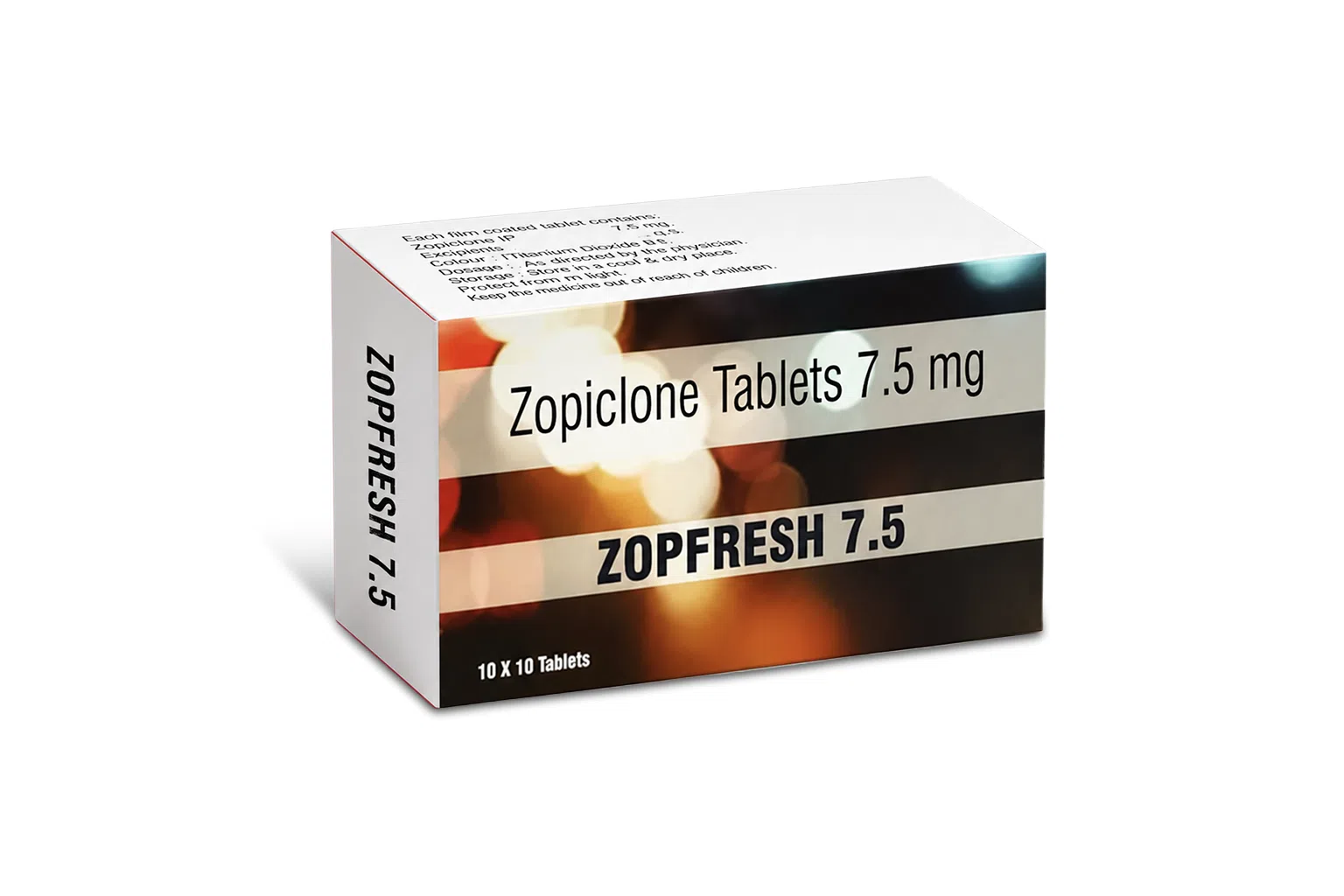
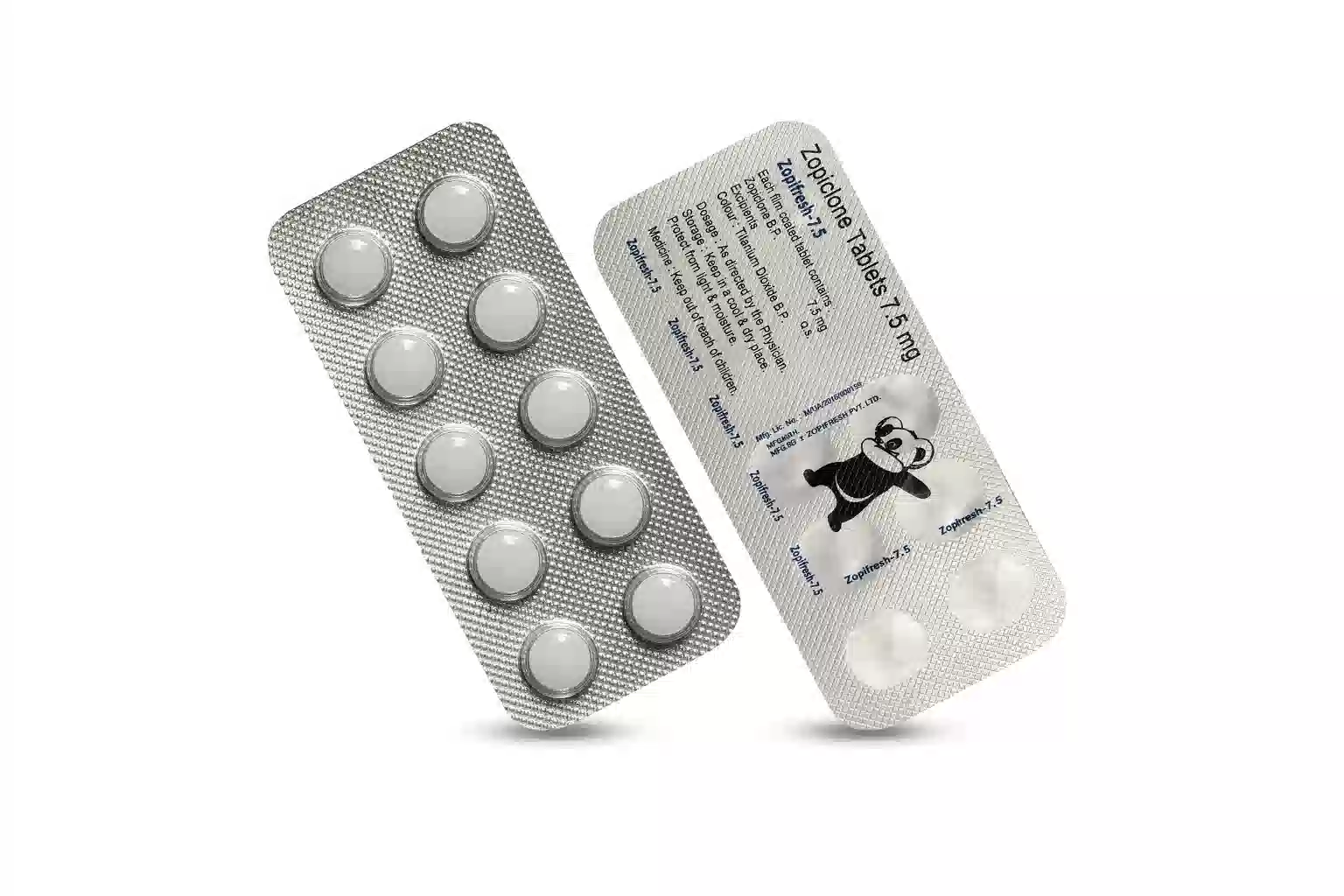
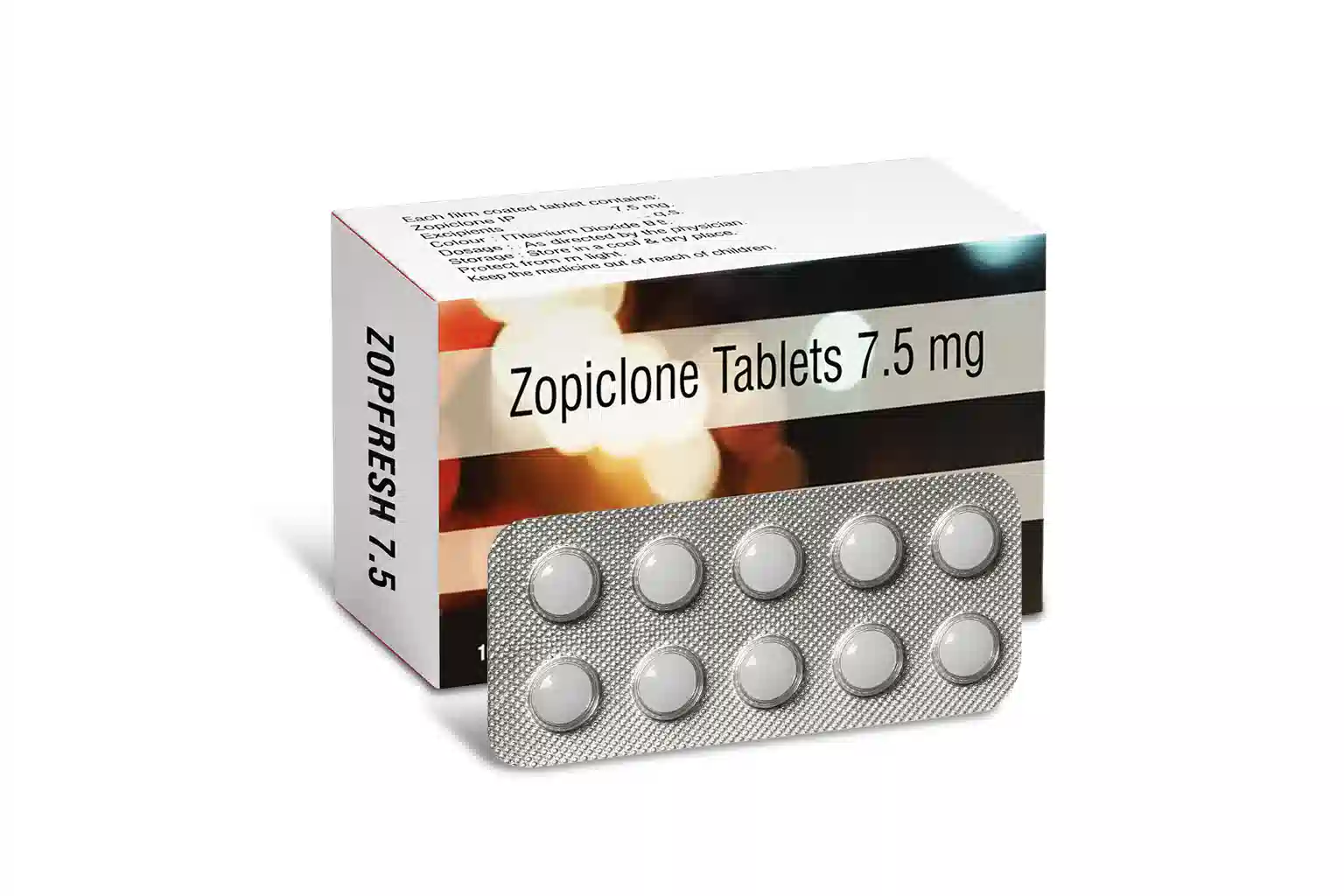
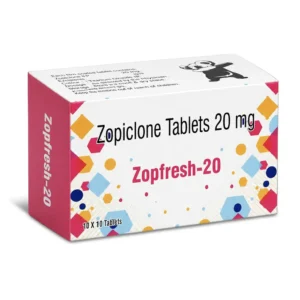
Zopfresh 7.5 mg tablets contain zopiclone which is a non-benzodiazepine hypnotic agent for short-term management of insomnia. It’s designed to help you fall asleep faster and less often during the night. This drug should be taken under medical supervision and for short periods of time, since it acts on the central nervous system and can cause dependence.
Key Features
| About (Zopfresh 7.5 mg tablets) |
| Drug Class: Hypnotic and Sedative |
| Subclass: Non-benzodiazepine (Cyclopyrrolone). |
| Product Details | |
| Composition | Active ingredients:
Inactive ingredients:
|
| Packaging Type | Tablet |
| Pack Size | 10*10 |
| Dosage | 7.5 mg |
| Shelf Life | 36 months |
| Usages | Short-term treatment of insomnia |
How does Zopfresh 7.5 work?
Zopiclone increases the activity of gamma-aminobutyric acid (GABA), a neurotransmitter that inhibits activity in the central nervous system. It attaches to certain receptors on the GABA-A receptor complex. This action enhances the inhibitory effect of GABA, causes hyperpolarization of neurones and results in a sedative-hypnotic effect that promotes the initiation and maintenance of sleep.
Usage
- Primary indication: Short-term treatment of insomnia in adults where the condition is severe, disabling, or causes significant distress.
- Used to help patients fall asleep more quickly.
- Can assist in reducing the frequency of nighttime awakenings.
Dosage
- The standard recommended dose for adults is one 7.5 mg tablet taken immediately before bedtime.
- Elderly, frail patients, or those with renal/hepatic impairment: A lower starting dose of 3.75 mg (half a tablet) is generally recommended.
- The duration of treatment should be as short as possible, typically ranging from a few days to a maximum of four weeks, including a tapering-off period.
- Treatment duration should not generally exceed 7-14 days when possible.
- Always follow your healthcare provider’s prescribed dosage instructions.
Side effects
Possible side effects include:
- Headache
- Dry mouth
- Drowsiness and dizziness the following day
- Metallic or bitter taste in the mouth
- Gastrointestinal disturbances
Less common but serious side effects:
- Memory loss (amnesia), particularly if 7-8 hours of uninterrupted sleep is not possible
- Confusion, irritability, or mood changes
- Unusual behavior, agitation, or hallucinations (paradoxical reactions)
- Sleepwalking or other complex sleep behaviors
Withdrawal symptoms (following abrupt cessation):
- Rebound insomnia (worsening of sleep problems)
- Anxiety, restlessness, and tension
- Headache, muscle pain, and sweating
Interactions
- Alcohol: Concurrent use is strictly prohibited as it increases sedative effects and impairs coordination.
- CNS Depressants: May have additive effects with other sleeping pills, sedatives, anxiolytics, antipsychotics and narcotic analgesics causing increased risk of severe drowsiness, respiratory depression and coma.
- Antihistamines: Some anti-allergy or cough/cold medicines may increase sedation.
- CYP3A4 inhibitors: Drugs such as erythromycin and ketoconazole can increase the level of zopiclone.
Pharmacokinetics
- Oral absorption is reliable, resulting in an approximate bioavailability of 75%.
- Peak Plasma Concentration: Reached in 1 to 2 hours post dose.
- Protein Binding: Weak approx. 45% which suggests a low risk of displacement interactions.
- Metabolism Extensive hepatic metabolism, primarily by CYP3A4 enzyme.
- Elimination Half-Life: Approx. 5 hours in healthy adults which may be extended to around 7 hours in elderly patients.
- Excretion: Metabolites are eliminated mainly by the urine and to a lesser extent by the feces.
Precautions
- Dependence and Withdrawal: Use for longer than four weeks increases the risk of dependence. Sudden stop can result in withdrawal symptoms and rebound insomnia.
- Alcohol: Must be avoided entirely during treatment due to additive sedative effects.
- Contraindications: Do not use if you have severe liver disease, myasthenia gravis, severe breathing problems or sleep apnea.
- Memory Impairment: Patients should be advised to sleep 7-8 hours after dose administration to reduce the risk of anterograde amnesia.
- Not recommended for use during pregnancy or while breastfeeding.
- Special Populations: The safety and efficacy in children and adolescents under 18 have not been established.
Conclusion
Zopfresh 7.5 mg tablets are an effective short-term treatment of insomnia. It helps people to fall asleep faster, and stay asleep longer. It is a non-benzodiazepine hypnotic, and thus works by a different mechanism than benzodiazepines. Because of the potential for dependence and interactions, it should be used only as directed, and for the shortest time necessary to control symptoms.
FAQs
1. What is Zopfresh 7.5 used for?
Zopfresh 7.5 is a medicine used for the short-term treatment of insomnia, which helps people to fall asleep faster and to wake up less during the night.
2. How long can I take Zopfresh 7.5?
Treatment should be as short as possible, usually a few days up to a maximum of 4 weeks including a period of tapering off.
3. What are the common side effects?
Common side effects include metallic taste in the mouth, dry mouth, drowsiness and dizziness the next day.
4. Can I drink alcohol while taking Zopfresh?
No. Strictly no alcohol as the combination can lead to dangerous sedation and severe impairment.
5. Is Zopfresh the same as a benzodiazepine?
No. It is in a different class of drugs called cyclopyrrolones. It has a different structure and binding site, but interacts with similar brain receptors to increase GABA.
Sarah Wilson –
The product arrived on time and was properly packed. Everything matched the description on the website.